
What to Wear to Your First Salsa Class
Updated: Oct 12
Table of Contents
What to Wear to Your First Salsa Class: A Simple Starting Point
Comfortable Clothes for Salsa Dancing That Let You Move Freely
Tops and Bottoms That Work for Turns and Footwork
What Shoes to Wear for Salsa Dancing (And What to Avoid)
If You Do Not Own Dance Shoes Yet
Foot Support and Fit for a First Lesson
What Not to Wear to Salsa Class: Common Mistakes to Skip
What to Bring to Your First Salsa Class Beyond Your Outfit
Studio Dress Codes, Floor Rules, and Inclusive Options
Inclusive Options Across Body Types, Gender Expression, and Mobility Needs
Accessories and Items to Remove or Secure
A Simple Outfit Checklist by Season and Class Setting
Conclusion: Dress for Comfort, Dance with Confidence
Frequently Asked Questions
Last Updated: October 9, 2026
What to Wear to Your First Salsa Class: A Simple Starting Point
What to wear to your first salsa class comes down to one rule: dress so you can move freely and turn without slipping.
The longer answer matters more: the wrong shoes can make your first lesson frustrating, and the wrong fabric can leave you overheated halfway through.
At Latin Soul Dance, nervous beginners walk in every week worrying about looking silly.
The good news: you probably own most of what you need already.
Key Takeaway The single biggest factor in how well your first class goes is your footwear. Smooth soles let you turn. Grippy sneakers stop you dead and can twist a knee.
Comfortable Clothes for Salsa Dancing That Let You Move Freely
Comfortable clothes for salsa dancing are any clothes you can raise your arms and step wide in without restriction. Cotton, linen, and stretchy blends work best. Skip anything tight, stiff, or heavy.
Salsa involves turns, hip movement, and quick footwork. Your clothing needs to follow all of it.

Tops and Bottoms That Work for Turns and Footwork
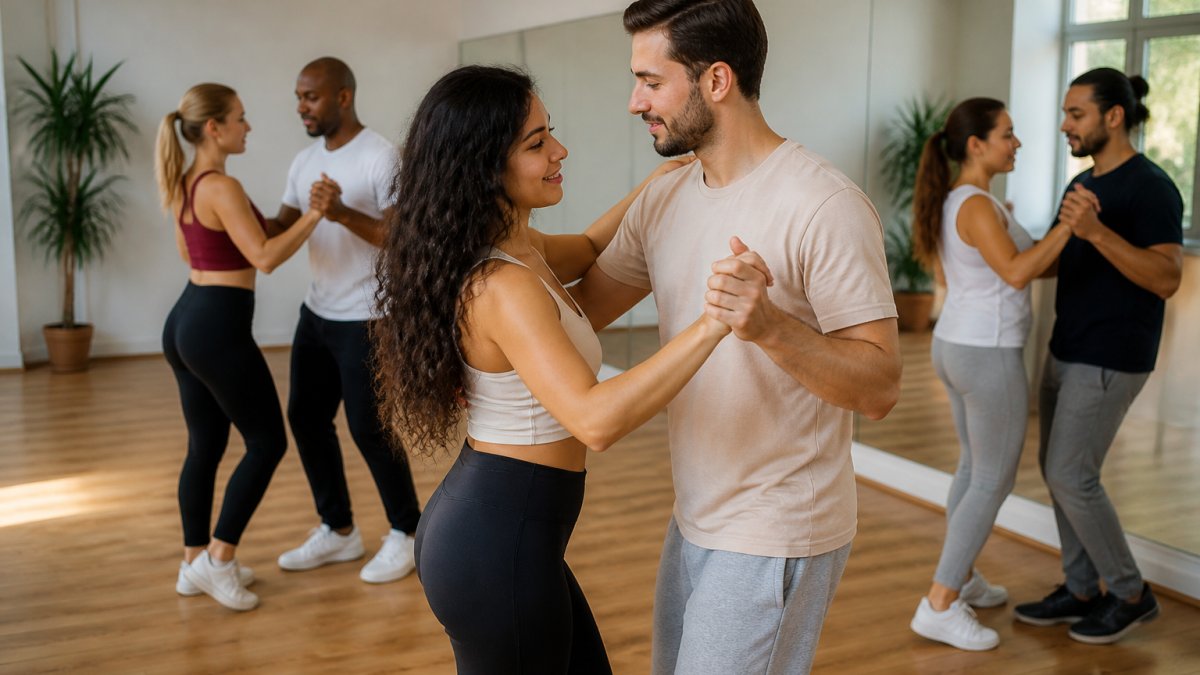
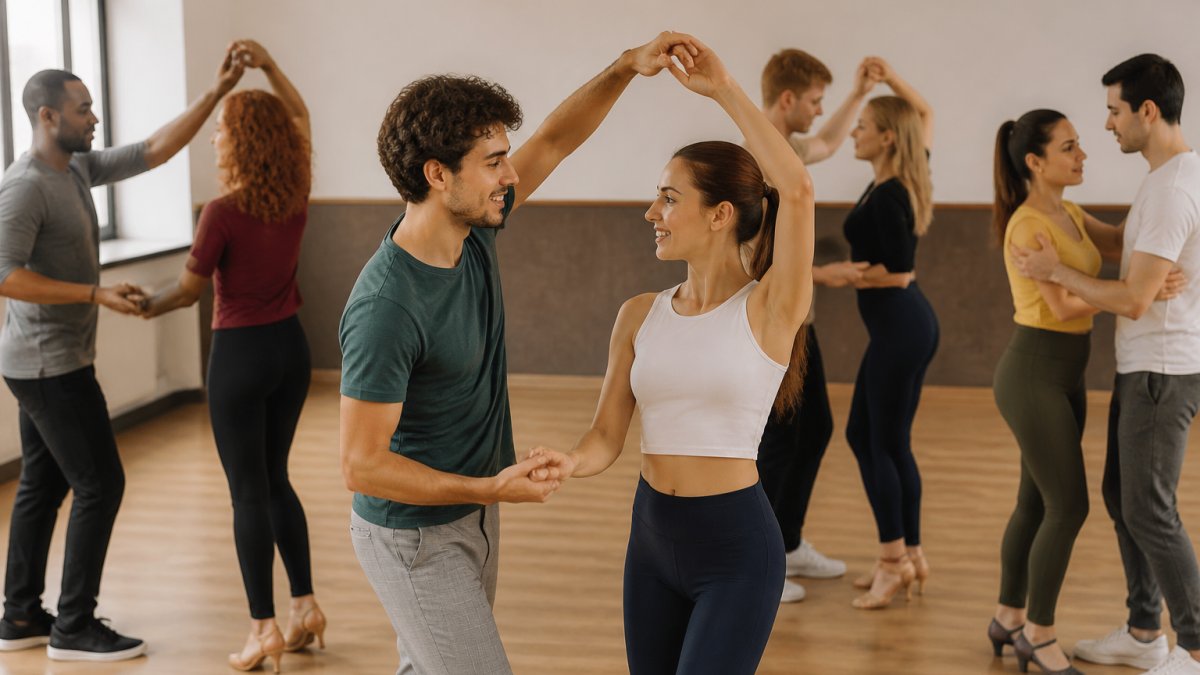
A simple casual T-shirt or sleeveless top is ideal, fitted enough not to fly up during a turn, loose enough to breathe.
For bottoms, the safest picks are:
Leggings or fitted joggers
Cropped pants that end above the ankle
Jeans with some stretch, if you prefer them
Watch the length: anything dragging near the floor can catch underfoot. You want a fitted ankle or clean hem, not fabric pooling around your shoes.
Light colors keep you cooler than black under studio lights. If you sweat easily, a light cotton or linen top is your friend.
What Shoes to Wear for Salsa Dancing (And What to Avoid)
What shoes to wear for salsa dancing is the question that trips up most beginners.
What to Wear for Salsa & Bachata: Is Your Dance Outfit Appropriate?
Dance With Rasa
Here is the part most guides get wrong. People assume a good athletic shoe is a safe choice. It is not.
Grippy sneakers are built to stop you sliding, great for running, bad for salsa.
What to look for instead:
Smooth or low-friction soles that let you pivot. Leather, suede, and hard plastic soles all work; rubber does not.
Secure straps so the shoe stays on during turns. A slip-on that shifts mid-spin is a hazard.
Closed-toe shoes for foot support and protection, especially if you are still learning footwork.
guidance on choosing dance footwear from a professional dance body
If You Do Not Own Dance Shoes Yet
You do not need to buy anything before your first class. Buying specialist shoes before you know whether you enjoy salsa is a waste of money.
Try these options from your own closet:
Smooth-soled leather shoes with a low heel. Oxfords, loafers, and simple leather flats all pivot well.
Ballet flats or simple dance sandals. The thin sole is the point, not a drawback.
Clean indoor-only shoes with a slick bottom. If the sole is hard and smooth, it will work.
Socks on a smooth studio floor, if the studio allows it. Some do, some do not, ask first.
Test them at home first. Stand on a smooth floor (tile or wood, not carpet) and try a slow pivot on the ball of your foot. If your foot turns easily without gripping, you are set.
What to avoid as a substitute:
Running shoes and cross-trainers. Deep treads grip the floor and fight your turns.
Hiking boots or heavy work shoes. Too much grip and too much weight.
Brand-new shoes you have never worn. Blisters on your first class are avoidable.
Pro Tip Bring your dance shoes in a separate bag and change at the studio. Street shoes carry grit onto the floor, and many studios ask you to swap them at the door. If you are testing closet shoes, bring two pairs, you can switch if the first one grips.
Foot Support and Fit for a First Lesson
Support matters more than style on day one. You will be on your feet for 45-60 minutes, often with more time on the balls of your feet than you are used to.
A few practical points:
Lace or strap securely. A loose shoe is worse than a grippy one because it can slide off mid-turn.
Break in new shoes before class. Wear them around the house for an hour first.
Bring a spare pair of socks. Fresh socks mid-class reduce friction and blisters.
If you buy dance shoes later, look for a low heel, a suede or leather sole, and a strap across the instep, that covers most beginner needs and lasts through your first year.
What Not to Wear to Salsa Class: Common Mistakes to Skip
What not to wear to salsa class is a short list, but every item can ruin your evening: grippy sneakers, high heels, and anything that restricts movement or catches underfoot.
Skip these:
Athletic shoes with deep treads. They grip the floor and fight your turns.
High heels. They wreck your balance while you are still learning footwork.
Long, flowing skirts or wide-leg trousers. Fabric catches underfoot and can trip you.
Stiff jeans with no stretch. They limit your steps and get uncomfortable fast.
That last point matters more than people expect. A long necklace or dangling bracelet can catch on a partner during a turn. Take off anything that swings.
Watch Out Wearing grippy running shoes to a salsa class is the most common beginner mistake. The sole grips the floor, your body keeps turning, and the twist lands in your knee. Swap them for smooth soles before you dance.
What to Bring to Your First Salsa Class Beyond Your Outfit
What to bring to your first salsa class is simple: water, a small towel, and a change of shirt if you sweat a lot. Add a bag for your street shoes and you are ready.
Pack these:
A water bottle
A small towel
A spare top if you sweat heavily
Your dance shoes, if you have them
Arrive a few minutes early to change shoes, find the room, and say hello before the music starts. That small buffer makes the class feel less rushed.
Studio Dress Codes, Floor Rules, and Inclusive Options
Studio dress codes exist to protect the floor and keep everyone safe, but they vary more than beginners expect, this is the part most guides skip. Requirements are set by the venue, so the only reliable source is the studio itself.
Ask about the rules before your first visit. A quick message or a look at the studio's website saves awkwardness later. The questions worth asking:
Are outdoor shoes allowed on the floor? Many studios require indoor-only shoes to keep grit off the surface.
Do you allow socks or bare feet? Some do, some do not, and it often depends on the floor type.
Is there a dress code? Most salsa studios have none beyond 'clothing you can move in', but a few ask for no jeans or no exposed midriffs.
Is there a changing area? Useful if you plan to swap shoes or shirts at the door.
Floor rules matter because the wrong sole can damage the surface or cause a fall. If a studio asks you to change shoes, it is protecting the floor everyone dances on.
Inclusive Options Across Body Types, Gender Expression, and Mobility Needs
Salsa is for every body. Whatever your size, gender expression, or mobility needs, the right outfit is the one that lets you move and feel at ease. Fitted clothing is not a requirement.
A few adaptable starting points:
If you prefer looser clothing, choose a fitted base layer under a loose top. The base layer stays put during turns; the outer layer gives you the coverage you want.
If you prefer more coverage, a long-sleeve breathable top and full-length leggings or joggers work as well as shorts and a tank.
If you are self-conscious about midriff exposure, a top that stays tucked or a high-waisted bottom solves it without restricting movement.
If you use a mobility aid or have joint concerns, flat, secure shoes with a smooth sole are still the priority. Tell your instructor what you need, good teachers adjust footwork and turns so everyone can take part.
If you have mobility considerations, tell your instructor before class starts. Most teachers will offer a seated variation, a slower turn, or a different role rather than have you sit out.
Pro Tip When in doubt, dress as you would for a light gym session: breathable top, stretchy bottoms, smooth-soled shoes. That combination clears the dress code at virtually every studio and keeps you comfortable through the whole class.
Accessories and Items to Remove or Secure
Small items cause big problems in a partner dance. Before you step onto the floor:
Long necklaces and dangling earrings. They swing, tangle, and can catch on a partner during a turn.
Loose bracelets and watches. A metal watch can scratch a partner's arm; a loose bracelet can catch on clothing.
Rings with high settings. They can catch on fabric or a partner's hand.
Long hair. Tie it back if it swings into your face or your partner's.
A simple rule: if it swings, dangles, or drags, take it off or tie it back before the music starts.
A Simple Outfit Checklist by Season and Class Setting
Use this checklist to pack for your first salsa class. It covers warm and cool weather, plus the difference between a studio class and a social dance.
Item | Warm Weather | Cool Weather | Best For |
Top | Sleeveless cotton top | Fitted long-sleeve top | Free movement |
Bottoms | Shorts or cropped pants | Leggings or stretch jeans | Turns and footwork |
Shoes | Dance sandals | Closed-toe smooth soles | Pivoting safely |
Extras | Water and towel | Light layer to remove | Staying comfortable |
A quick note on temperature: studios heat up fast once class starts. Wear a light layer you can take off, keep your water close, and pack a spare top if you sweat heavily.
Conclusion: Dress for Comfort, Dance with Confidence
The nerves before a first class are normal, and the outfit worry is the easiest part to solve. Comfortable clothes, breathable fabric, and smooth-soled shoes cover almost everything.
That is the whole point of this guide from Latin Soul Dance. Our friendly international community, classes for all levels, and supportive instructors make it easy to start.
Let's Dance - Book Now and take your first step with us.
Frequently Asked Questions
Can I wear trainers to salsa class?
Regular athletic trainers with thick rubber soles grip the floor, which makes turning and pivoting harder on your knees. If you do not own dance shoes yet, choose flat shoes with smooth or low-friction soles, like leather-soled shoes or dance sandals. Many beginners start with a pair of clean, smooth-soled shoes they already own. Avoid grippy sneakers for your first salsa class and see how your turns feel before investing in dedicated footwear.
What should I bring to my first salsa class besides clothes?
Pack a water bottle, a small towel, and a change of shirt if you sweat easily. Breathable fabrics like cotton and linen help, and light colors hide sweat marks less obviously than dark ones. Bring shoes with smooth soles if you have them, or arrive a few minutes early to ask the instructor about suitable alternatives. A positive attitude and a willingness to laugh at yourself matter more than any accessory.
Do I need special clothes for salsa dancing as a complete beginner?
No special clothing is required for your first salsa class. Comfortable clothes that allow freedom of movement, such as leggings, casual trousers, shorts, or a knee-length dress, work well. Choose breathable fabrics and avoid anything too long that could catch underfoot. The goal is to move freely, stay cool, and feel at ease. Fancy outfits are for social dancing nights later, not your first lesson.
How should I dress if I am older or have mobility concerns?
Choose supportive, closed-toe shoes with secure straps and low-friction soles for stability. Wear comfortable, breathable clothing that does not restrict your knees or hips, and consider layers you can remove as you warm up. Many studios offer seated or low-impact options. Speak to your instructor before class about any concerns, and they can suggest modifications so you enjoy salsa dancing at your own pace.
Let’s Dance – Book Now


Comments