
Beginner Salsa Classes in The Hague: 2026 Guide
Table of Contents
Why Beginner Salsa Classes in The Hague Are Worth Starting Now
What to Expect at a First Salsa Class
Salsa Classes With No Partner: How It Works
How Long Does It Take to Learn Salsa?
Salsa Practice Tips for Beginners
Comparing Beginner Salsa Classes: What to Check Before You Book
Schedules, Prices and Signing Up
Conclusion
Frequently Asked Questions
Last Updated: October 18, 2026
Why Beginner Salsa Classes in The Hague Are Worth Starting Now
Walking into a dance studio for the first time takes nerve.
Beginner salsa classes in The Hague solve a specific problem. They give you a structured, low-pressure way to learn partner dancing from scratch, with other people who are also starting from zero. No prior rhythm training required.
Salsa itself is a partner dance built on a repeating eight-count step pattern, danced to Latin music in a lead-and-follow format.
What most guides miss is the social side. Learning salsa is not really about memorising moves. It is about showing up weekly, seeing the same faces, and slowly becoming part of a room.
Below, we break down exactly what happens in a first class, how the no-partner system works, how long progress takes, and what to check before you book anything.
Key Takeaway The single biggest predictor of whether you stick with salsa is not talent. It is whether your first class felt welcoming. Choose a school that rotates partners, teaches a clear basic step in lesson one, and runs socials where beginners are explicitly invited.
What to Expect at a First Salsa Class
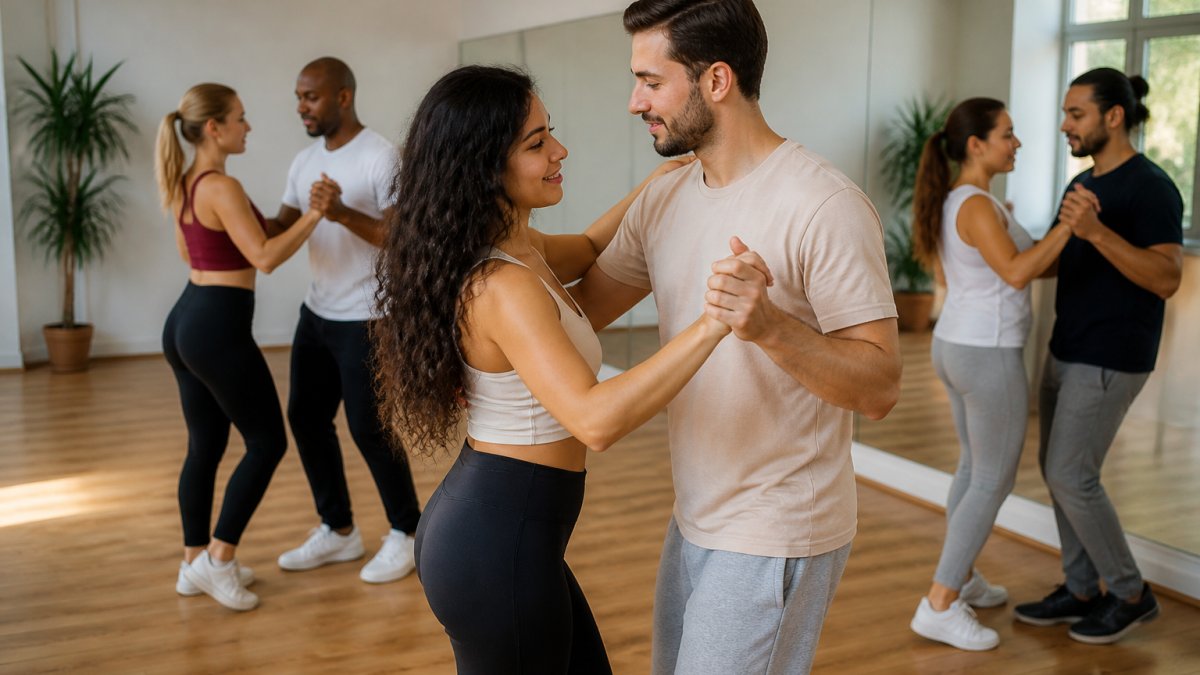
A typical first class runs 60 to 75 minutes and follows a predictable shape: a warm-up to the music, a breakdown of the basic step, one or two simple partner figures, and a short run-through at the end. You will not be thrown into freestyle dancing.
Arrive ten minutes early. Tell the instructor it is your first time. Most schools keep a register and will pair you with someone experienced if numbers allow.

Here is the honest version of the first hour:
The warm-up feels silly. It is a series of steps and weight shifts to music. Do it anyway; it teaches your body to move on the beat.
The basic step gets broken down slowly. Forward, back, back, forward, with a tap in between. Instructors count out loud, then drop the counting.
Partner work starts simple. Usually a right-hand hold and a basic turn. Nothing acrobatic.
You will mess up. Everyone does, including the people who look confident. Instructors expect it.
Wear shoes with a smooth sole that lets your foot pivot, or bring a pair to change into. Trainers grip too much and strain the knee on turns. Bring water. Skip the heavy meal beforehand.
Watch Out The most common first-class mistake is standing at the back hoping not to be noticed. Instructors cannot correct what they cannot see, and beginners who hide take two to three times longer to get the timing. Stand near the front where you can watch the feet.
Salsa Classes With No Partner: How It Works
Salsa classes with no partner are entirely normal. Most beginner courses are built on rotation, so everyone dances with everyone, and you never need to bring someone with you.
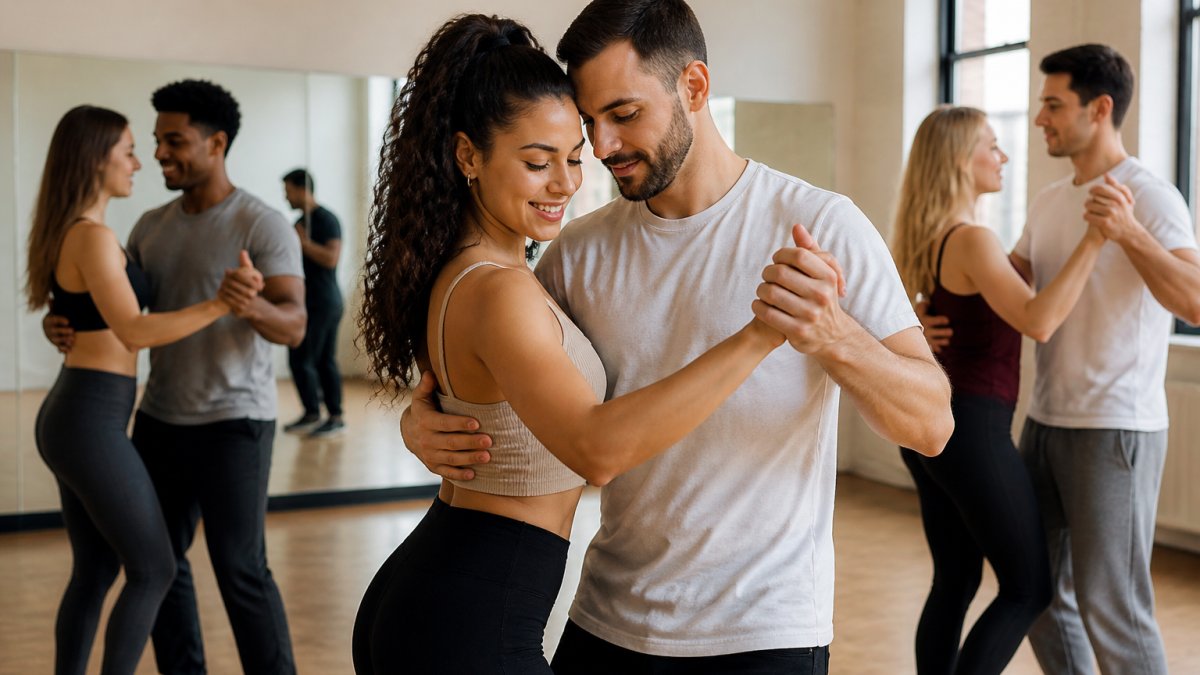
The rotation works like this: leaders form one line, followers another, and after each repetition the follower moves one place along. Over a class you will dance with eight to fifteen different people.
If you sign up with a friend or partner, tell the instructor. Most schools will keep you together for part of the class and rotate you for the rest.
A note on roles. In salsa, the lead and follow roles are not tied to gender in most modern schools. Plenty of people learn both.
The social payoff of rotation is bigger than the dancing. Expats in particular tell us the rotation is how they met their first friends here.
How Long Does It Take to Learn Salsa?
Most beginners can dance a full song socially after six to eight weeks of weekly classes, provided they also attend at least one social in that period. Fluency, where moves come without thinking, usually takes six to twelve months of consistent practice. Accelerating this transition often depends on having the right essential dance accessories to ensure comfort and stability during those long hours of practice.
That timeline assumes one class per week plus practice. Two classes a week roughly halves it. Attending classes but never dancing socially stretches it out indefinitely, because class and social dancing demand different skills.
Progress tends to arrive in steps rather than a smooth curve:
Stage | Typical timeline | What it feels like |
Basic step and timing | Weeks 1-3 | Clunky. You count out loud. |
First partner figures | Weeks 3-6 | Confusing, then suddenly repeatable |
Dancing a whole song | Weeks 6-10 | Exhilarating and exhausting |
Leading or following unfamiliar partners | Months 3-6 | Genuinely social |
Comfortable at any social | Months 6-12 | Automatic |
The plateau around month three catches people out. Your basic step is solid, new figures feel harder, and progress seems to stall. That is normal. It usually breaks the moment you stop worrying about the moves and start listening to the music.
Salsa Practice Tips for Beginners
Practice works best in short, frequent bursts. Ten minutes, four times a week, beats one long session at the weekend, because salsa timing is a motor skill and motor skills consolidate through repetition with rest in between.
Here is what we would do in your first two months:
Practise the basic step without music first. Count one to eight out loud. Get the footwork automatic before adding rhythm.
Then add slow music. Find a slow salsa track and step through the basic on repeat. Do not attempt partner figures yet.
Film yourself once a week. Thirty seconds is enough. You will spot what your instructor has been telling you.
Practise the follower's part as well as the leader's. Understanding both makes you a better dancer and a more useful partner in class.
Go to one social per month, minimum. Sit out the first twenty minutes if you need to. Then dance.
Pro Tip Record your instructor demonstrating the figure at the end of class, with their permission. Video removes the "was that a left turn or a right turn" problem that eats the first ten minutes of your practice at home.
The other habit worth building: listen to salsa music outside class. On the bus, while cooking. You are training your ear to find the beat, and the beat is the one thing no amount of step practice fixes on its own.
Comparing Beginner Salsa Classes: What to Check Before You Book
You can compare beginner salsa classes on five criteria in under ten minutes, and those five criteria predict almost everything about your experience. The teaching approach matters more than the studio's interior.
The comparison that actually matters:
What to check | Why it matters | Red flag |
Level structure | Clear beginner-to-advanced progression keeps you moving forward | One mixed "all levels" class with no path |
Trial option | Lets you test the room before committing | No trial and no refund policy |
Partner rotation | Teaches you to dance with anyone | Fixed pairs only, or "bring your own partner" |
Teaching language | You need to understand corrections in real time | Unclear, or mixed with no explanation |
Socials and events | The bridge from class to real dancing | No socials, or none open to beginners |
Two things are worth asking directly before you pay. First, what happens if you miss a class: whether you can make it up in a parallel group, or whether the credit is lost. Second, what the cancellation terms are for a course package.
On teaching approach, ask whether the school teaches a crossbody style with a clear count structure or a more circular style. Neither is better, but they feel different, and switching later means relearning your basic.
At Latin Soul Dance, we run classes for every level with simple step-by-step guidance, so a complete beginner and a returning dancer can each find the right group.
Schedules, Prices and Signing Up
Weekly classes are the standard format, and most schools run several beginner slots across the week so you can fit one around work. Evening classes fill fastest; midday and weekend slots tend to be quieter and better for anyone nervous about crowds.
Pricing depends on the school, the course length, and whether you buy a single class, a block of classes, or a monthly membership. We do not publish figures here because they change and vary by package. Check the current rates directly with each provider before you book, and ask specifically about:
Trial classes. Many schools offer a low-cost or free introductory session. Take it. One class tells you more than any website.
Course enrollment versus drop-in. A course gives you a fixed group and steady progression. Drop-in classes suit irregular schedules but repeat material.
Cancellation and pause terms. Ask what happens if you travel for a month or injure an ankle.
Payment in instalments. Some providers split course fees; ask before assuming.
Registration is usually online, and beginner intakes tend to open in blocks rather than continuously, so a course may start every few weeks.
For anyone on a tight budget, ask about reduced-rate schemes. Providers in the city sometimes accept the Ooievaarspas, the municipal pass for residents on a low income, so it is worth a direct question rather than an assumption either way.
For current schedules, start dates and rates, check the Latin Soul Dance class schedule or contact the studio directly and ask which beginner group has space.
Conclusion
The hardest part of learning salsa is the twenty minutes before your first class, not the class itself. Everything after that is repetition, music, and a room full of people who were exactly where you are a few weeks ago.
If you want a beginner-friendly start with clear step-by-step guidance, a mixed-level programme, and an international crowd that expects newcomers, Latin Soul Dance is built for exactly that. Our supportive instructors teach every level, our classes run weekly, and the focus is on getting you dancing rather than getting you perfect.
Let's dance. Book your first class and see how the room feels.
Frequently Asked Questions
Is salsa easy to learn for beginners?
Salsa is built on a few repeating steps, so most people can follow the basic rhythm within their first lesson. The challenge is coordination and confidence, not fitness. Beginner salsa classes in The Hague usually start with the forward-back basic and simple turns, then add partner work once the footwork feels natural. Expect to feel clumsy for two or three sessions; that is normal and passes quickly with weekly practice.
Do I need a partner to join a beginner salsa class?
No. Most salsa schools rotate partners during class, so you will dance with several people and never sit out. Salsa classes with no partner are common, and solo attendees often make up half the room. If you prefer to bring someone, that works too, but you will still rotate. Wear shoes that slide slightly and bring water; the rest is handled by the instructor.
How long does it take to learn salsa?
Most beginners can dance a full song socially after six to eight weeks of weekly classes. Feeling comfortable at a salsa social usually takes three to six months. Progress depends on how often you practice and whether you attend socials. Two classes per week plus one social night will move you faster than one weekly lesson alone. There is no fixed timeline, but consistent attendance matters more than talent.
What should I wear to my first salsa class?
Wear comfortable clothes you can move in and shoes that slide on a wooden floor without gripping too hard. Trainers with rubber soles can stick and strain your knees, so many beginners bring a pair of smooth-soled shoes or dance shoes. Avoid flip-flops. Bring a water bottle and a small towel. There is no dress code at beginner level, and no one expects you to own special gear.
How often should beginners take salsa classes?
One class per week builds the habit, but two classes per week speeds up progress noticeably because your body repeats the patterns more often. Add one social dancing night per month once you know the basic steps. Rest days matter too; sore feet are common in the first few weeks. Consistency over three months beats an intense fortnight followed by a long break.
What should I look for in a beginner-friendly salsa class?
Check that the class is labelled beginner or level 1, that partners rotate, and that the instructor explains slowly and repeats. Ask about trial classes, class size, and whether you can switch levels if the pace is wrong. A good beginner salsa class in The Hague will let you try a session before committing to a full course, and will tell you clearly what happens if you miss a week.
Let’s Dance – Book Now


Comments