
Benefits of Bachata for Beginners: 7 Ways Dance Helps
Table of Contents
Why Bachata for Beginners Is Easier Than You Think
Bachata Dance Steps for Beginners: Your First Lesson
The Basic Step and Weight Shifts
Hip Movement, Frame, and Connection
Bachata Fitness Benefits: Cardio, Strength, and Stamina
Hip Mobility, Posture, and Body Alignment Through Dance
Mental Health, Mood, and Stress Relief on the Dance Floor
Bachata vs Salsa for Beginners: Which to Start With
Beginner Bachata Practice Tips and Realistic Timelines
Realistic Timelines (and Why They Vary)
What to Wear and What to Expect at Your First Lesson
Warm-Ups and Injury Prevention
Accessibility, Adaptations, and Solo Practice
Conclusion: Start Your Bachata Journey
Frequently Asked Questions
Last Updated: October 19, 2026
Why Bachata for Beginners Is Easier Than You Think
Most people assume they need rhythm, coordination, or years of training before they can step onto a dance floor. They don't. Bachata for beginners works because the dance is built on four slow steps and a tap, repeated in a small box.
At Latin Soul Dance, we've watched absolute beginners walk in nervous and leave a class grinning within an hour. The reason is simple: bachata asks you to walk in rhythm, not to perform. If you can count to four, you can start.
Below, we'll show you exactly what the first lesson looks like, what changes in your body and mood over the first few months, and how to avoid the mistakes that make new dancers quit.
Key Takeaway Bachata is a partner dance from the Dominican Republic built on a four-step pattern with a tap. The basic step takes about ten minutes to learn and a lifetime to polish. Beginners progress fast because the pattern repeats.
Bachata Dance Steps for Beginners: Your First Lesson
Your first lesson covers three things: the basic step, weight shifts, and a simple frame. Nothing else. Instructors who pile on turns and dips in week one are doing beginners a disservice.

The Basic Step and Weight Shifts
The basic bachata step moves in a small side-to-side box: three steps in one direction, a tap, then three steps back, a tap. Count it as 1-2-3-tap, 4-5-6-tap.
The tap is where most beginners go wrong. They stomp it or skip it. The tap carries no weight; your foot touches the floor and lifts. That light tap is what creates the rhythm and gives you time to shift your hips.
Weight shifts are the real skill. Each step transfers your body weight fully onto one leg. If your weight stays centred, your hips can't move and the dance looks stiff.
Hip Movement, Frame, and Connection
Hip movement in bachata comes from bent knees and settled weight, not from forcing your hips side to side.
Frame means your arms and posture. Hold your partner's hands lightly, keep your elbows relaxed, and stand tall. A rigid frame feels like pushing; a light frame feels like conversation.
Connection is the part nobody tells you about. Bachata is a partner dance, so you're communicating through your hands and body weight the whole time. Beginners who focus only on footwork miss this. Listen with your arms.
Pro Tip Practise the basic step alone in your kitchen for five minutes a day. Count out loud. Once the count disappears and your feet move on their own, you're ready to add a partner.
Bachata Fitness Benefits: Cardio, Strength, and Stamina
Bachata counts as moderate-intensity cardiovascular exercise when you dance continuously.
What does that actually do for your body?
Cardiovascular fitness. Continuous dancing raises your heart rate into the moderate zone, the band public health guidance describes as where you can talk but not sing. Over weeks, that improves how efficiently your heart and lungs deliver oxygen.
Leg and glute strength. Every step loads one leg at a time, and the tap step adds a small unilateral balance challenge. That is real muscular work, though it is endurance-oriented rather than maximal-strength work.
Core engagement. Holding a light frame, tall spine, relaxed shoulders, engaged midsection, keeps your core switched on for the whole song, not just during a crunch.
Stamina. Longer dance nights become easier within a few weeks because your aerobic base improves and your movement becomes more economical.
Balance and coordination. The weight shifts train proprioception, your sense of where your body is in space, which carries over to daily movement and reduces stumble risk.
How hard is it, really? Intensity depends on pace, body size, how much you actually move, and how many breaks you take. Nobody can give you a precise calorie number for a bachata class, and anyone who does is guessing.
The honest limit. Bachata is not resistance training. It will not build maximal strength or replace a structured strength programme. It beats sitting on the sofa, and it builds a base you can layer other training onto, but treat it as cardiovascular and coordination work, not as a substitute for lifting.
Key Takeaway Bachata delivers moderate-intensity cardio, leg and core endurance work, and better balance, but it is not strength training and it is not a calorie-counting tool. Judge intensity by the talk test, not by a wearable's guess.
Hip Mobility, Posture, and Body Alignment Through Dance
Hip mobility improves through repetition, not stretching alone. Bachata asks your hips to rotate and shift with every step, which gently takes them through a fuller range than walking does.
Posture changes too. A good frame means a tall spine, relaxed shoulders, and a lifted chest. New dancers often slouch to look at their feet.
Body alignment matters for safety. Keep your knees tracking over your toes, avoid locking them, and let your weight settle into the floor.
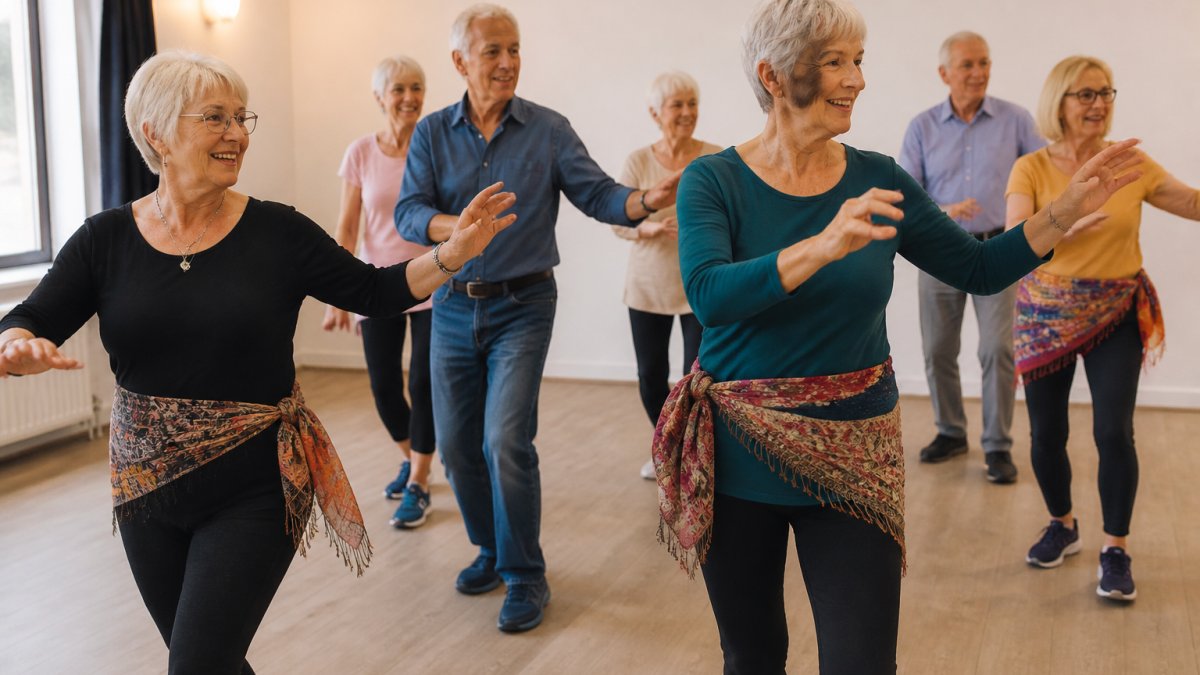
Seniors and anyone with knee or hip concerns should mention it to the instructor before class. Most studios can suggest adaptations like smaller steps and slower tempo.
Mental Health, Mood, and Stress Relief on the Dance Floor
Dancing lifts mood in a way that's hard to replicate elsewhere. The combination of music, movement, and social contact hits several levers at once.
Stress reduction works through focus. When you're counting steps and following a partner, there's no room to rehearse tomorrow's to-do list. That mental break is the point.
Confidence builds quietly. Week one, you watch your feet. Week six, you're chatting while you dance.
Social connection might be the biggest benefit of all. Partner dancing forces low-stakes conversation, and expats in particular find it a fast way into a new community.
Watch Out Don't treat dance as a substitute for mental health care. It supports well-being, but if you're struggling, speak to your huisarts (GP) as well.
Bachata vs Salsa for Beginners: Which to Start With
Start with bachata if you want a gentler learning curve. Choose salsa if you want faster footwork and a bigger scene. That's the honest short answer.
Bachata runs at a slower tempo with a simpler step pattern, so beginners feel competent sooner. Salsa moves faster, uses more complex timing, and often has a steeper first month. Neither is "better"; they suit different temperaments.
Feature | Bachata | Salsa |
Tempo | Slower, more relaxed | Faster, more energetic |
Basic step | Four steps plus a tap | Quick-quick-slow timing |
Learning curve | Gentler for absolute beginners | Steeper first month |
Feel | Close, romantic, playful | Sharp, rhythmic, lively |
Best for | Nervous beginners, low-impact seekers | Dancers wanting speed and variety |
Many dancers learn both eventually. Bachata first is the kinder route.
Beginner Bachata Practice Tips and Realistic Timelines
Most beginner guides promise fast progress and skip the practical preparation. This section does the opposite: it sets realistic expectations, gives you a first-lesson checklist, and covers the safety and accessibility details competitors leave out.
Realistic Timelines (and Why They Vary)
Expect to feel comfortable with the basic step in two to three classes. Expect to dance a full song without watching your feet in roughly six to eight weeks of weekly practice. Social dancing with confidence usually arrives around the three to six month mark.
Why the variation? Motor learning happens between sessions, not during them. Short, frequent practice beats one long weekly session because your brain consolidates the pattern overnight. That is the mechanism behind the timelines, and it is why five minutes a day outperforms an hour on Sunday.
What to Wear and What to Expect at Your First Lesson
Clothing: comfortable clothes you can move in, jeans are fine if they stretch, gym wear is fine too. Nothing fancy is required.
Footwear: shoes with a smooth sole that lets you pivot. Avoid running shoes with deep tread; they grip the floor and strain your knees when you turn.
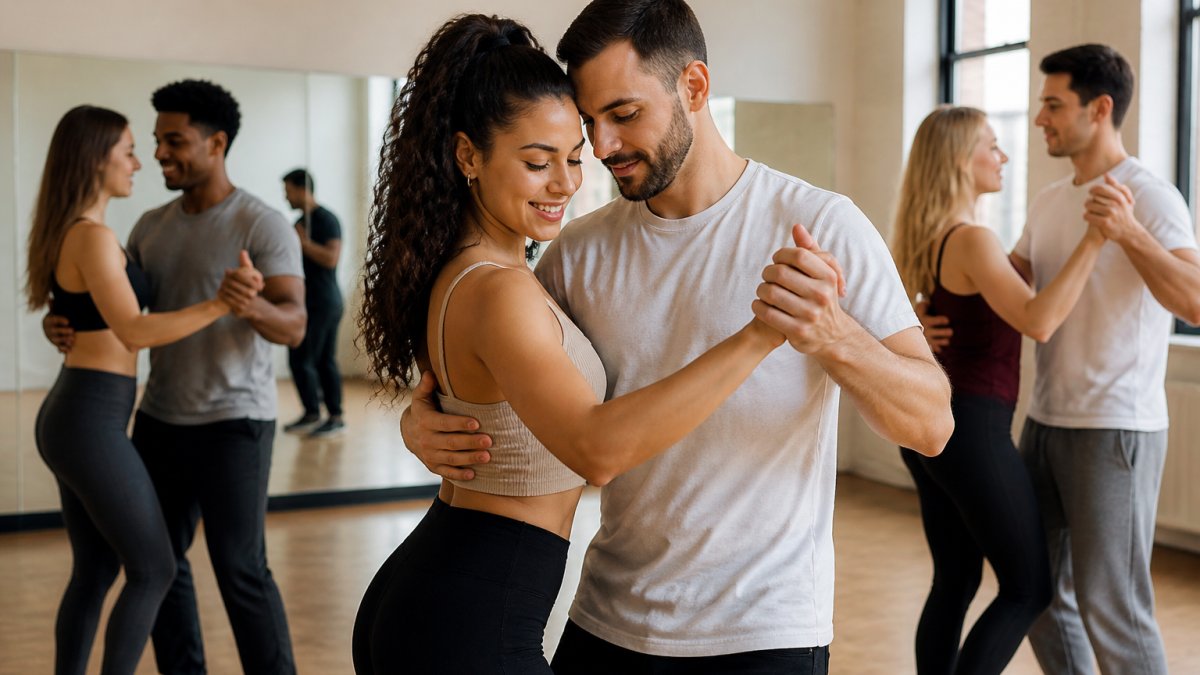
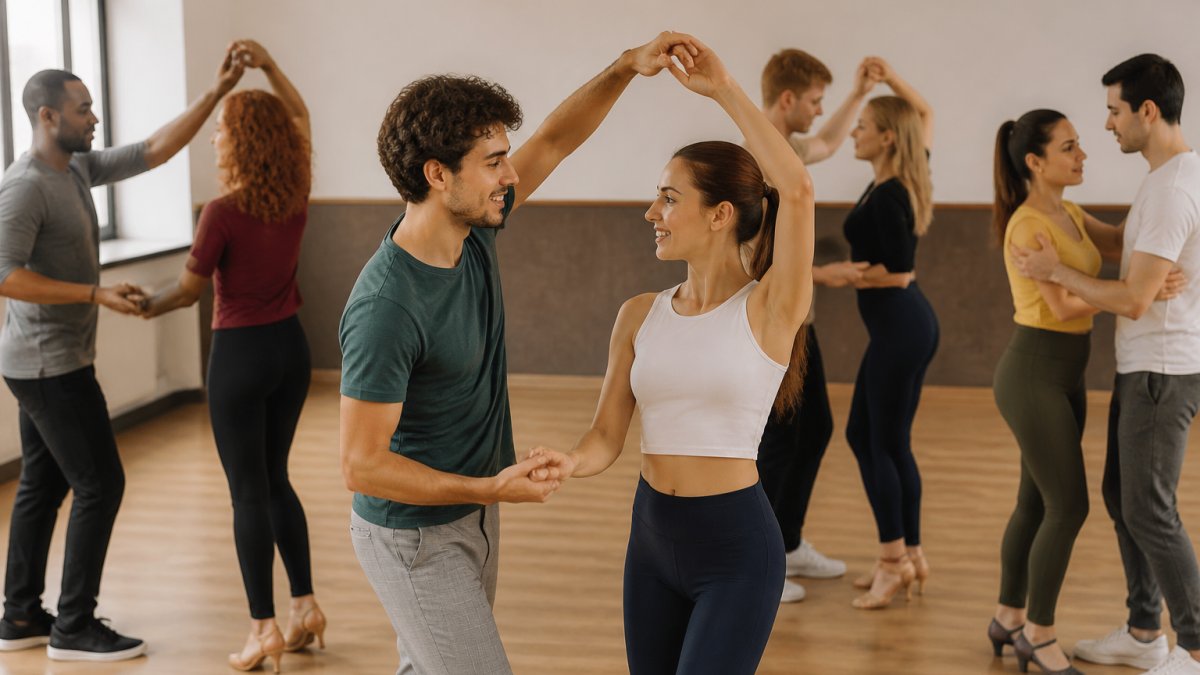
What happens: a warm-up, the basic step and weight shifts, a simple frame, then practice with a partner or in a small group. Turns and dips should not appear in week one.
What to bring: water, and a willingness to look silly for twenty minutes. Everyone does.
Warm-Ups and Injury Prevention
Warm up for five minutes before class: ankle circles, knee bends, hip rotations, and a brisk walk. Cool down with gentle stretches for calves, hips, and lower back.
Most beginner injuries come from dancing on locked knees, wearing the wrong shoes, or overdoing it in week one. Keep your knees soft and tracking over your toes, take breaks when you need them, and stay hydrated. Soreness is normal; sharp pain is not, stop and mention it to the instructor.
Accessibility, Adaptations, and Solo Practice
Bachata is more adaptable than most beginners assume. If you have knee or hip concerns, ask the instructor before class; most studios can suggest smaller steps, a slower tempo, or seated variations. You do not need a partner to start, the basic step and weight shifts are practised solo, and many beginners drill them at home before ever stepping into a class. Solo practice is also the fastest way to build the muscle memory that makes partner work feel natural.
Pro Tip Ask about a trial class before committing to a membership. A good studio lets you try a session and see whether the teaching style suits you, and it gives you a low-pressure way to test the footwear and clothing advice above.
Beginner practice habits that actually work:
Dance at home for five to ten minutes daily rather than one long session weekly
Film yourself once a month to see progress you cannot feel
Practise with different partners; adapting is the skill
Go to a social night early, even just to watch
Focus on rhythm and musicality before adding turns
Conclusion: Start Your Bachata Journey
The hardest part of bachata is walking through the door the first time. After that, the steps do the work for you.
At Latin Soul Dance, we teach bachata to complete beginners every week in a friendly, international setting. Our supportive instructors give simple step-by-step guidance, and our classes welcome every level, from nervous first-timers to regulars. You'll develop real dance skills, improve your fitness through dance, and find a community that feels like home.
Let's Dance - book your first class and see how good an hour on the dance floor feels.
Frequently Asked Questions
Is bachata easy for beginners?
Bachata is one of the more accessible partner dances to start with. The basic step is a simple three-step pattern with a tap, repeated in a small box, and most beginners can follow it within a single lesson. You do not need prior dance experience, flexibility, or a partner to begin. The rhythm is steady and the music is slow enough to hear the beat clearly, which makes bachata for beginners far less intimidating than faster Latin styles. Progress comes from regular practice rather than natural talent.
Do you need a partner to start learning bachata?
No. Most beginner classes rotate partners, so you will dance with several people in a single session and never sit out. Rotating also speeds up learning because you adapt to different frames and timing. If you prefer to bring someone, that works too, but it is not required. Studios that teach bachata for beginners usually pair up solo attendees at the door, which is also a simple way to meet people if you have recently moved to a new city.
How often should beginners practise bachata?
One class per week plus two short home practice sessions of 10 to 15 minutes is enough to see steady progress in the first two months. Consistency matters more than duration: practising the basic step and weight shifts briefly several times a week builds muscle memory faster than one long session. After four to six weeks you can add a social dance evening to apply what you have learned. Expect footwork to feel automatic somewhere between eight and twelve weeks of regular practice.
Which is easier for beginners, salsa or bachata?
Bachata is generally easier to start with. Its basic step is a compact three-step pattern with a tap and a clear, slower beat, while salsa typically uses faster timing and more complex turn patterns. That said, salsa builds quicker footwork and sharper coordination once you are comfortable. Many beginners take bachata first to learn connection and rhythm, then add salsa. Trying a single intro class in each style is the most reliable way to see which suits you.
Let’s Dance – Book Now


Comments