
Rueda de Casino: The Cuban Dance Where Everyone Moves Together.
Updated: Aug 15
Discover how Rueda de Casino originated in Havana, how the caller guides the circle, and why this joyful Cuban dance creates such a powerful sense of community.
Rueda de Casino: Born in Cuba, Built in a Circle

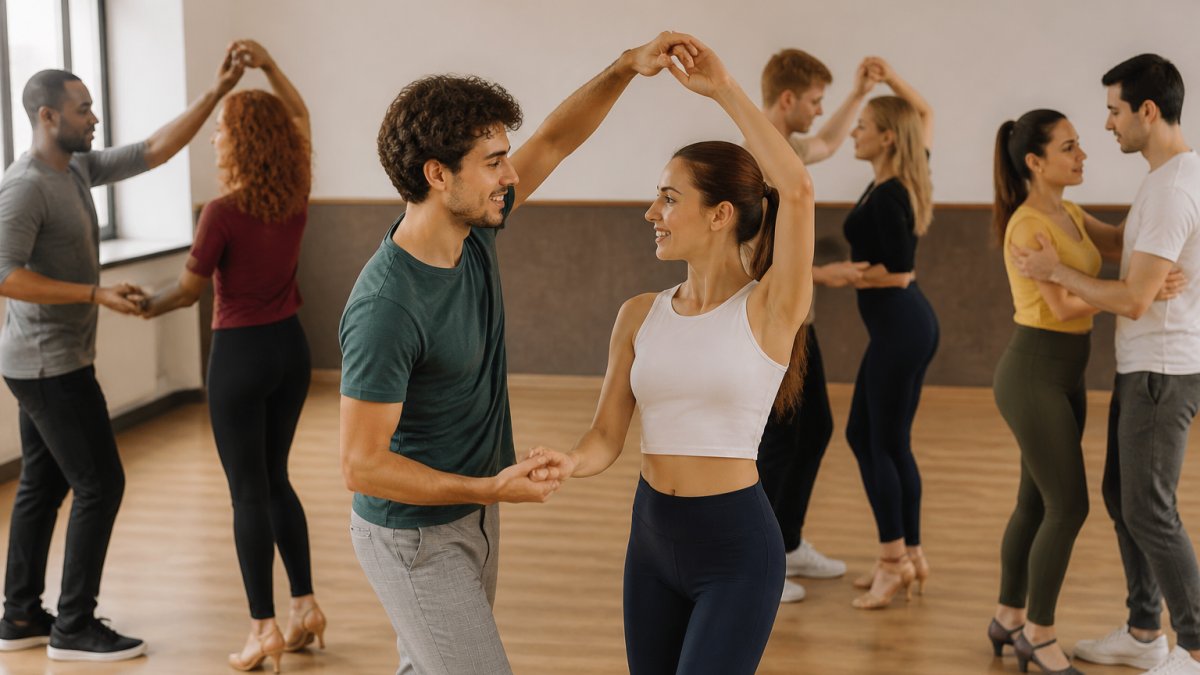
Imagine several couples dancing in a circle. The music is playing, everyone is moving together, and one person suddenly calls out: “¡Dame!”
The dancers complete the figure and change partners. A few seconds later, another command follows. The circle keeps turning, the energy grows, and everyone becomes part of the same moving conversation.
This is Rueda de Casino: a joyful Cuban social dance built on rhythm, teamwork, improvisation, and human connection.
Today, Rueda de Casino is danced around the world. But its story begins in Cuba.
What is Rueda de Casino?
The word rueda means “wheel” or “circle” in Spanish.
In Rueda de Casino, two or more couples form a circle and dance a series of Cuban partner-dance figures together. One dancer takes the role of the caller, traditionally known as el cantante. The caller announces the next movement, and everyone in the circle performs it at approximately the same time.
Many figures include a partner change. This means the dancers continually move around the circle, meeting and dancing with different people.
The result is both coordinated and spontaneous. Everyone shares a common vocabulary, but the caller decides what happens next.
You listen, react, connect, and keep moving.
Where did Rueda de Casino originate?
Rueda de Casino, developed in Havana, Cuba, was in the late 1950s.
During this period, social and recreational clubs were important meeting places for Cuban music and dance. Couples experimented with different movements, turns, and spatial formations while dancing to the popular music of the time.
The Casino Deportivo is one of the social clubs most closely associated with the early development and popularisation of casino dancing.
However, it is more accurate to understand Rueda de Casino as a collective cultural creation rather than the invention of a single dancer or a single moment.
It grew through the creativity of many Cuban social dancers.
As couples began interacting with one another, exchanging partners and dancing coordinated figures in a circle, the format that we now recognize as Rueda de Casino started to take shape.
Cuban dance research describes casino as an urban social dance created through an organic process of cultural exchange and popular creativity. It spread rapidly from Havana to other parts of Cuba. EcuRed – Casino as a Cuban dance
Why is it called “Casino”?
This is where an important distinction must be made:
Casino has nothing to do with gambling.
In Cuba, casino is the name of the partner-dance style that developed during the 1950s. Internationally, it is often called Cuban salsa, although many Cuban dance specialists prefer to use the original name: casino.
Therefore:
Rueda = wheel or circle; Casino = the Cuban partner-dance style
Together, Rueda de Casino describes a circle of couples dancing casino.
The dances that influenced Casino
Casino did not appear out of nowhere. It developed through Cuba’s long and extraordinarily rich history of popular and social dance.
Researchers often identify three important influences:
Son Cubano
Casino inherited much of its rhythmic foundation, partner connection, and movement vocabulary from son cubano.
Figures such as dile que no and vacílala, as well as different ways of traveling and turning with a partner, have strong connections to son.
Cha-cha-chá
Cha-cha-chá contributed to the idea of couples dancing in an organized circle while following a guiding voice.
Some early turns and linked-arm figures also developed from movements already being explored in cha-cha-chá.
Rock and roll
The turns and hand connections found in 1950s rock and roll also influenced how dancers created new, faster, and more complex partner figures.
Over time, casino dancers continued to incorporate gestures and movements from other Cuban traditions, including rumba, guaguancó, and Afro-Cuban body movement.
This is one reason the casino feels so creative and alive: it carries many layers of Cuban musical and dance history.
How does a Rueda de Casino work?
Every rueda is a shared experience, but most follow the same essential structure.
1. The couples form a circle
The dancers position themselves in couples, facing around or towards the center of the circle.
The circle may consist of only a few couples or grow into a large formation. When there are many dancers, several smaller ruedas can be created.
2. The caller leads the group
One dancer becomes el cantante, the caller.
The caller dances inside the rueda while choosing and announcing the next figure. The sequence is usually not entirely predetermined, which gives the rueda its playful, improvisational character.
The caller must observe the group, understand the music, and choose movements that fit the dancers’ level and energy.
3. Everyone follows the same command
Each figure has a name. When the caller announces it, all the couples perform the movement together.
Common calls include:
Guapea
Dame
Dile que no
P'rriba
P'bajo
P'al centro
Enchufla
Pégale un cacho/tarro
Vacílala
Setenta
Sombrero... many more.
Some calls are accompanied by hand signals. This helps the dancers understand the command when the music is loud.
The names and execution of certain figures can vary between Cuban regions, among teachers, and within international rueda communities. Rueda de Casino is a living social tradition, not a completely standardized choreography.
4. The dancers change partners
Partner changes are central to the rueda.
A figure may send one dancer to the next person in the circle or reorganize several couples at once. This constant movement makes the rueda look like a turning wheel.
More importantly, it creates connection. Instead of dancing with only one person, everyone becomes part of the complete group.

It is more than synchronised dancing
The beauty of Rueda de Casino is not perfection.
Sometimes a command is misunderstood. Someone turns in the wrong direction. The circle becomes confused—and everyone laughs before finding the rhythm again.
That is part of the experience.
Rueda develops:
Musical awareness
Coordination and memory
Partner connection
Group communication
Quick reactions
Confidence
A sense of belonging
You are responsible for your own movement, but you are also paying attention to your partner, the caller, the music, and the entire circle.
It is individual expression inside a collective experience.
From Havana to the world
From its beginnings in Havana, Rueda de Casino spread across Cuba and later traveled internationally through Cuban dancers, teachers, and communities.
Today, ruedas can be found throughout Europe, Latin America, North America, Asia, and beyond. Dancers may not speak the same language, but commands such as dame, enchufla, and vacílala create a shared vocabulary.
Each community contributes something new while keeping the Cuban roots of the dance alive.
The wheel is now turning in The Hague
At Latin Soul Dance, we have started our own Rueda de Casino classes led by Nelson and Angela.
Our classes are not only about memorizing figures. We explore the music, the Cuban roots of the dance, and the feeling of moving together as a community.
You will learn how to:
Dance the fundamental movements of Cuban casino
Recognize and respond to rueda commands
Connect comfortably with different partners
Understand the structure and rhythm of the music
Move confidently inside the circle
Enjoy the social and playful spirit of Cuban dance
You do not need to be a perfect dancer. You only need curiosity, attention, and the willingness to join the circle.
At Latin Soul Dance, people of different nationalities, ages, and dance backgrounds come together through Latin music and movement. Rueda de Casino represents exactly what we believe in:
Dance is culture. Dance is connection. Dance is something we create together.
Ready to join the rueda?
Come discover the music, movement, and community of Rueda de Casino in The Hague.
The caller is ready. The music is playing. The wheel is waiting for you.
Join our Rueda de Casino classes at Latin Soul Dance.


Comments