
Reggaeton Fitness Classes for Beginners: Your First Steps
Table of Contents
Why Reggaeton Fitness Classes for Beginners Are Worth Trying
What Happens in a Beginner Reggaeton Dance Workout
Reggaeton Dance Basics You'll Learn First
The Core Steps and Rhythms
How Instructors Break Moves Down for Newcomers
How Reggaeton Cardio Workout Sessions Build Fitness
What to Wear and Bring to Your First Class
Common Worries About Starting, Answered
How to Choose the Right Beginner Class for You
Frequently Asked Questions
Last Updated: October 21, 2026
Why Reggaeton Fitness Classes for Beginners Are Worth Trying
Most people assume they need rhythm before they can join a dance class. It's the other way around. You build rhythm by moving, and reggaeton fitness classes for beginners are built exactly for that starting point. At Latin Soul Dance, we see newcomers walk in nervous and leave grinning, week after week.
Here's the honest case for trying it. Reggaeton fitness blends dance steps with cardio intervals, so you train your heart and coordination at the same time. You don't need a background in dance. You need comfortable shoes and an open mind.
Three things make it work for total beginners:
The beat is repetitive and easy to feel, so you find the rhythm fast
Instructors teach the same core moves again and again, so nothing feels rushed
The group setting takes the pressure off, because everyone is learning together
Below, we explain exactly what happens in a first class, what to wear, and how to pick the right one. But first, here's what most guides get wrong: they describe reggaeton fitness as intense cardio for fit people. It isn't. A good beginner class slows everything down.
What Happens in a Beginner Reggaeton Dance Workout
A beginner reggaeton dance workout follows a simple arc: warm-up, step-by-step moves, a cardio block, then a cool-down. The whole session usually runs 45 to 60 minutes, with the first half focused on learning rather than sweating.
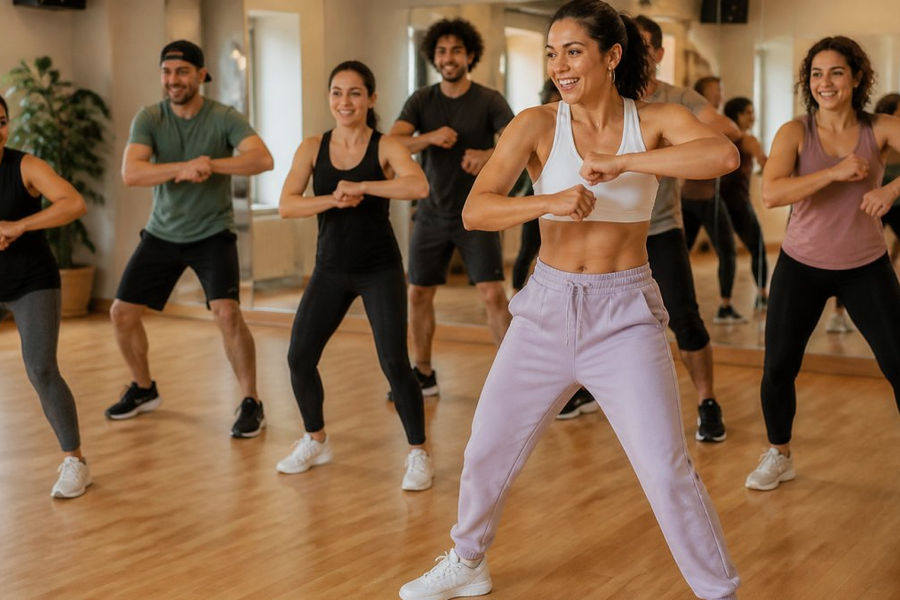
Here's the typical shape of a class:
Warm-up (5-10 minutes). Light marching, shoulder rolls, and simple side steps to get the joints moving.
Step learning (10-15 minutes). The instructor introduces two or three basic moves and repeats them slowly.
Cardio block (20-25 minutes). The same moves get faster and are strung together with music.
Cool-down (5 minutes). Slower stretches and breathing to bring your heart rate down.
What surprises most newcomers is how much laughing happens. You will get steps wrong. That's part of it. Instructors expect it and build the class around it.
Pro Tip Stand near the middle or back of the room on your first visit. You'll see the instructor in the mirror, and you won't feel watched by the people behind you.
Reggaeton Dance Basics You'll Learn First
The reggaeton dance basics are a small set of repeating steps: the basic march, the hip circle, the side step, and the "dembow" bounce. These four cover most of what you'll do in your first month.
The Core Steps and Rhythms
Reggaeton moves to a steady, four-beat rhythm with a distinctive kick pattern. You don't count it in your head. You feel it in your feet. Instructors usually start with a simple march in place, then add hips, then arms.
The moves you'll meet first:
March step: weight shifts from foot to foot on the beat
Hip circle: slow rotation of the hips, kept small at first
Side step: step out, bring the other foot in, repeat
Dembow bounce: a light knee bend on the beat, the signature reggaeton feel
None of these require flexibility or prior training. They require repetition.
How Instructors Break Moves Down for Newcomers
Good instructors use a simple pattern: show the move, break it into parts, do it slowly, then speed it up. They name the move, demonstrate it facing the class, then turn around so you can copy from behind.
A common mistake among beginners is trying to add arms before the feet feel natural. Get the footwork first. Arms follow on their own.
How Reggaeton Cardio Workout Sessions Build Fitness
A reggaeton cardio workout builds fitness through interval-style movement: short bursts of faster dancing followed by recovery steps. This pattern raises your heart rate, then lets it settle, then raises it again.
Over a few weeks, most people notice three changes:
Better stamina during the faster blocks
Improved balance and coordination
More ease with the steps, so you think less and move more
The fitness benefit comes from consistency, not intensity. Two classes a week beats one hard session. If you're returning to exercise after a break, tell your instructor. They can suggest lower-impact versions of any move.
Watch Out Skipping the warm-up is the most common beginner mistake. Cold muscles and fast footwork don't mix well, and it's the quickest way to pull something in your first month.
What to Wear and Bring to Your First Class
Wear comfortable workout clothes you can move in, and bring a water bottle and a small towel. That's the full list. No special shoes, no dance experience, no gear.
A few practical notes:
Shoes: trainers with a bit of grip work best. Avoid running shoes with thick soles, which can catch on turns.
Clothing: anything breathable. Leggings or shorts both work.
Extras: a water bottle, a towel, and a hair tie if you need one.
Arrive ten minutes early. It gives you time to meet the instructor, find a spot, and settle in before the music starts.
Common Worries About Starting, Answered
"I've never danced before. Won't I look ridiculous?" No more than anyone else in the room. Beginner classes are full of people in the same position, and instructors teach to the least experienced person there.
"I'm 65. Is this low-impact enough?" Many classes offer lower-impact options for every move. Ask the instructor before you book. A good studio will tell you honestly whether a class suits you.
"What if I can't follow along after a few weeks?" Progress in dance is uneven. Some weeks click, others don't. Instructors repeat the basics on purpose, so nothing gets left behind.
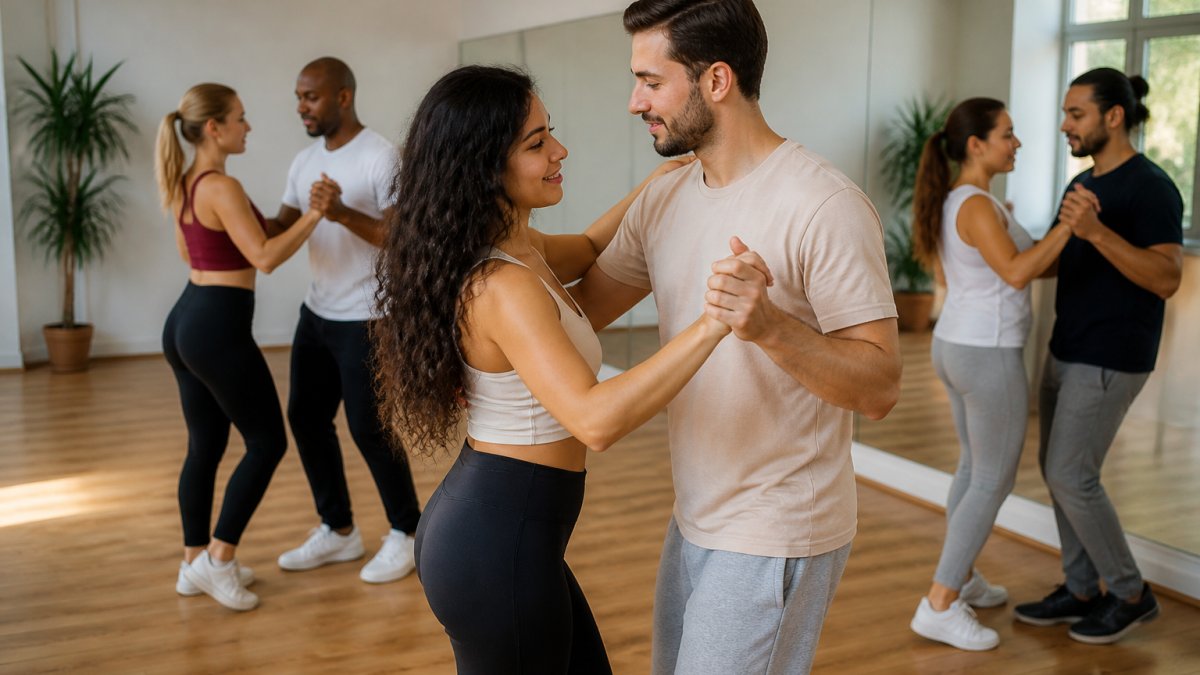
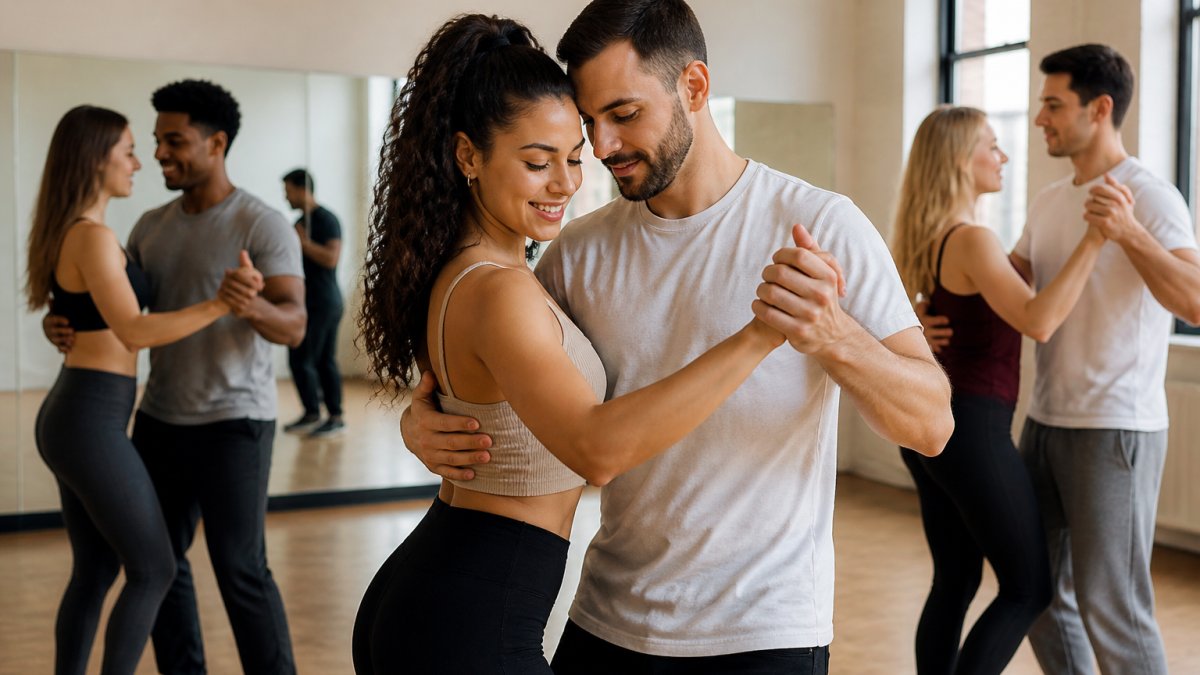
"I'm new here and don't know anyone." This is the worry we hear most. A friendly studio introduces newcomers to the group and pairs people up during partner drills. You won't be standing alone for long.
"What does it cost, and are there hidden fees?" Pricing depends on the studio, the class format, and the membership you choose. Check the studio's website for current rates and ask directly about missed-class policies before you commit.
How to Choose the Right Beginner Class for You
Pick a class labeled for beginners, taught by an instructor who breaks moves down slowly, in a studio that feels welcoming when you walk in. Those three things matter more than the style of music or the size of the room.
Use this checklist before you book:
The class is explicitly labeled beginner or "all levels"
The instructor demonstrates moves slowly and repeats them
The studio offers a trial class or a single-class option
You can ask about missed classes and pausing a membership
The schedule fits your working hours
The studio feels friendly when you visit or call
At Latin Soul Dance, our ReggaetonFit classes are built for exactly this: friendly instructors, simple step-by-step guidance, and an international crowd where nobody is the odd one out. We keep the atmosphere supportive so you can focus on the music instead of your feet.
Key Takeaway The best beginner class isn't the one with the best playlist. It's the one where the instructor slows down enough for you to keep up, and the room feels glad you showed up.
Frequently Asked Questions
Are reggaeton fitness classes suitable for complete beginners?
Yes. Beginner reggaeton fitness classes are built for people with no dance background at all. Instructors teach each move slowly, repeat it until the group follows, and build combinations step by step. You do not need rhythm training or prior experience, just comfortable clothing and water. Most studios offer introductory sessions or drop-in options so you can try one class before committing to a longer block.
Do I need dance experience to try a reggaeton dance workout?
No dance experience is required. A beginner reggaeton dance workout starts with the reggaeton dance basics: a steady bounce, simple hip movements, and basic footwork done at a slower pace. Instructors demonstrate each part and let you repeat it before adding the next. If a step feels tricky, you can keep doing the simpler version. The goal is movement and enjoyment, not performance.
What should I wear to my first reggaeton fitness class?
Wear comfortable sportswear you can move and stretch in, plus supportive trainers with a little grip for turning. Bring a water bottle and a small towel. Layers help because you will warm up quickly during the reggaeton cardio workout. Avoid brand-new shoes that may rub, and leave jewellery at home so it does not catch during arm movements.
Is reggaeton dancing a good cardio workout?
Yes. A reggaeton cardio workout keeps you moving almost continuously through dance combinations, which raises your heart rate and works your legs, hips, and core. Because the music drives the pace, many people find they keep going longer than in a standard gym session. Beginners can control intensity by taking the lower-impact version of each step, making it adaptable to most fitness levels.
Starting something new takes nerve. The first class is the hardest, and after that it's just music and movement. If you're ready to try reggaeton fitness in a welcoming, international setting, Latin Soul Dance offers beginner-friendly ReggaetonFit classes with supportive instructors, simple step-by-step guidance, and a community that makes room for everyone. Let's Dance - Book Now and take your first step.
Let’s Dance – Book Now


Comments