
What Makes Bachata Partner Connection Work?
Last Updated: November 5, 2026
Quick Summary
Bachata connection is the physical and musical link between two dancers, carried through posture, hands, frame and timing, so one person can suggest a movement and the other answers it smoothly. Build it with an upright torso over soft knees, loose hands, soft elbows, and signals led from your center rather than your arms.
Stand with feet about hip-width apart and keep your knees slightly bent, never locked.
A light handhold sends clearer signals than a tight grip, so keep hands loose and elbows soft.
Leaders should move their center first and let the hands follow, never pushing to force a turn.
Followers should wait, feel the signal, then respond instead of anticipating the next move.
Practise drills for ten minutes before class, starting solo, then with a partner, then with music.
Table of Contents
What Bachata Partner Connection Actually Means
Bachata partner connection techniques start with one idea: connection is a two-way physical conversation, not a set of moves you memorise.
Here is the part most guides get wrong. A Texas A&M University thesis on bachata dance describes bachata technique as a way of shifting relationships through touch, movement and power exchange.
Bachata connection is the physical and musical link between two dancers, carried through posture, hands, frame and timing. It lets one person suggest a movement and the other answer it smoothly.
So what does that look like in practice? You feel your partner's weight. You hear the rhythm together. You respond without guessing.
Bachata Posture: The Base Everything Else Sits On
Good bachata posture is an upright torso over relaxed, slightly bent knees, with your weight ready to move. It is not a stiff military stance. Think tall spine, soft joints.
Stance, Knees and Weight Placement
Stand with feet about hip-width apart. Keep the knees slightly bent so your legs act like springs.
A common mistake is locking the knees. That kills your balance and makes every weight change jerky. Keep them soft and you can transfer body weight smoothly in any direction.
Torso upright, shoulders down and back
Knees slightly bent, never locked
Weight on the balls of the feet
Your posture is the frame your partner reads. If your torso collapses, your signals get muddy.
Bachata Hand Connection: Light, Clear and Relaxed
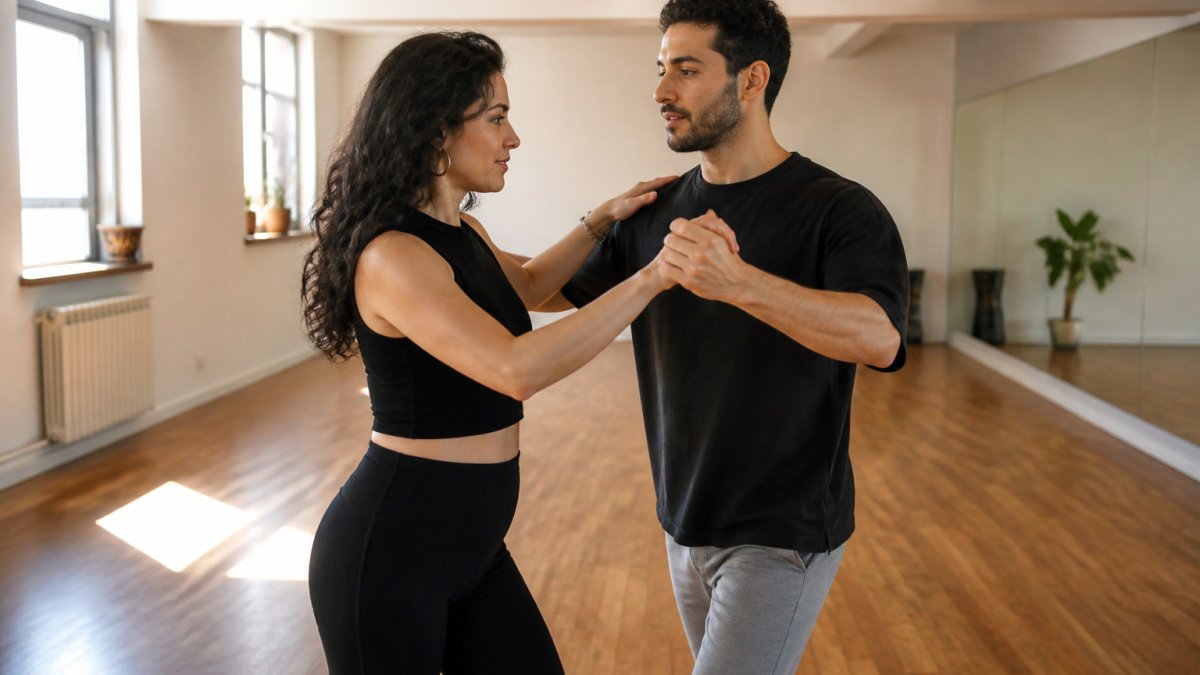
Bachata hand connection works best when hands are loose, relaxed and lightly touching. A light hold sends clearer signals than a tight grip.

Keep the elbows soft and slightly in front of the body. This light, supportive arm link is the main way leaders and followers communicate, as technical bachata guidance on frame and communication explains.
Open Hold vs Closed Hold
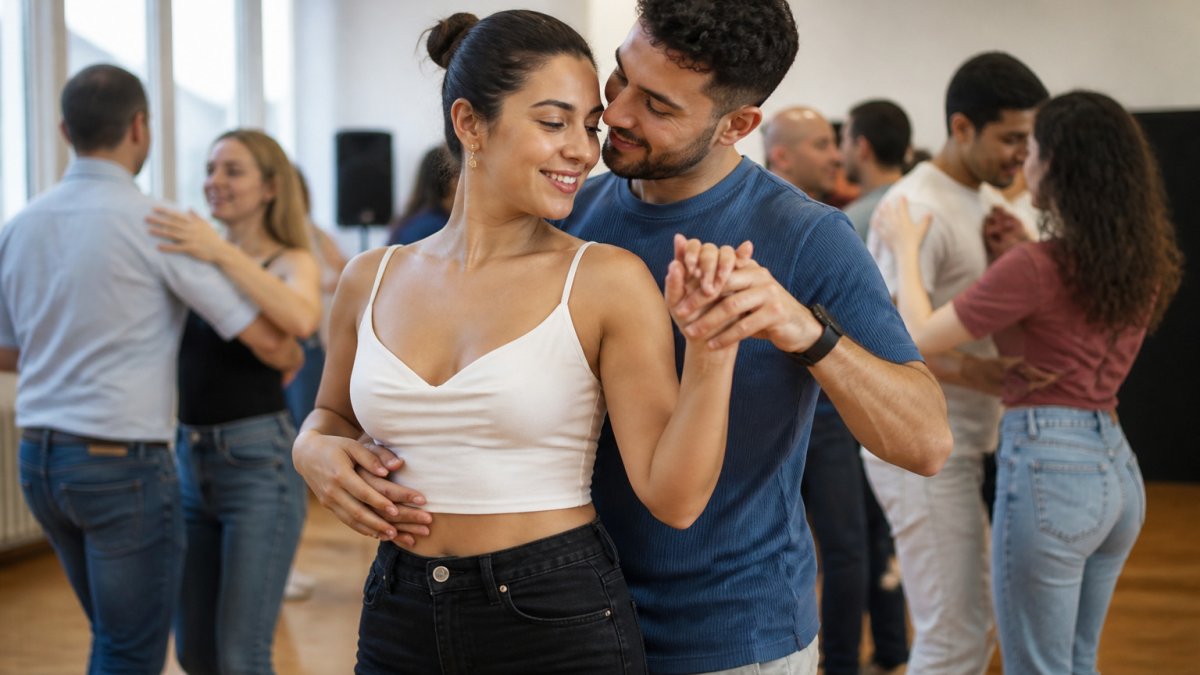
Open position gives you space to turn and style. Closed position brings you closer for sensual bachata and body movement. Both rely on the same relaxed hands and soft elbows.
Hold | Distance | Best For | Key Cue |
Open hold | Arm's length | Turns, footwork, styling | Light fingertip contact |
Closed hold | Close, chest to chest | Sensual bachata, body movement | Soft frame, shared center |
In either hold, loose hands beat tight ones. A relaxed handhold lets your partner feel a clear signal without being pulled.
Bachata Leading and Following as a Conversation
Bachata leading and following is a conversation built on physical signals, not force. The leader suggests, the follower answers. When both listen, the dance feels smooth and shared.
For Leaders: Signalling Without Pushing
Lead with your body, not your arms. Your torso and weight changes tell your partner where to go. The hands just pass the message along.
Move your center first, hands follow
Keep signals clear and early
Never push or shove to force a turn
Pushing is the fastest way to break connection. If you have to muscle a move, the signal was unclear. Slow down and lead from your core.
For Followers: Responding Without Anticipating
Follow the signal you actually feel, not the one you expect. Anticipating jumps ahead of your partner and breaks the conversation. Wait, feel, then respond.
Keep your own frame active but relaxed. You are not a passenger. Couples who want to build this together often find a bachata classes for couples guide useful for practising at home.
Bachata Connection Exercises You Can Practise at Home
Connection drills build body awareness and partner responsiveness over time. You do not need a partner for all of them. The key is progression: start solo to feel your own weight, add a partner to feel theirs, then add music and constraints.
Stage 1: Solo Awareness (No Partner)
These drills train the body mechanics that make partner connection possible.
Weight-shift ladder (solo): shift side to side on the balls of your feet for one song. Then do the same shift but pause for two beats on each side. Then shift on every beat. The ladder teaches you to control the speed of a weight transfer, which is what a partner reads as clarity.
Frame check (solo): stand tall, soft knees, elbows slightly in front of the body. Hold for 30 seconds, then relax for 10 and repeat three times. Notice where you tense, shoulders, jaw, lower back, and release it. Tension you carry alone becomes tension your partner feels.
Spring test (solo): with knees soft, bounce gently up and down for 20 seconds, then stop and freeze. If you wobble, your weight is too far back on your heels. Move it toward the balls of your feet and repeat.
Stage 2: Partner Pressure and Listening (With a Partner)
These drills build the two-way signal without music, so you can feel the mechanism clearly.
Hand pressure test: hold hands lightly and take turns leading a slow weight shift. The leader moves their center first; the follower responds only when they feel the shift. Do this for one minute, then swap roles. The goal is to use the least pressure that still produces a clear response.
Eyes-closed follow: the follower closes their eyes and responds only to touch and weight. The leader moves slowly and predictably. After one minute, swap. This drill exposes whether signals are coming from the hands or the body, if the follower can only respond when the hands move, the leader is leading with arms, not center.
Resistance dial: hold a light frame and have the leader gradually increase pressure until the follower says stop. Then reduce to the minimum that still feels connected. This calibrates force for both roles.
Stage 3: Musicality and Transitions (With Music)
Musicality walk: walk the basic step together, matching the rhythm without counting. Then have one partner clap the rhythm while the other steps, then swap. This separates hearing the music from moving to it, which is where most connection breakdowns start.
Hold transition drill: start in open hold, dance four basic steps, then transition to closed hold for four steps, then back to open. Repeat for one song. This drill makes the change of distance a deliberate, felt action rather than a sudden grab.
Constraint round: dance one song using only weight shifts and no hand signals. Then one song using only hand signals and no weight shifts. Comparing the two shows you which channel you rely on and which you neglect.
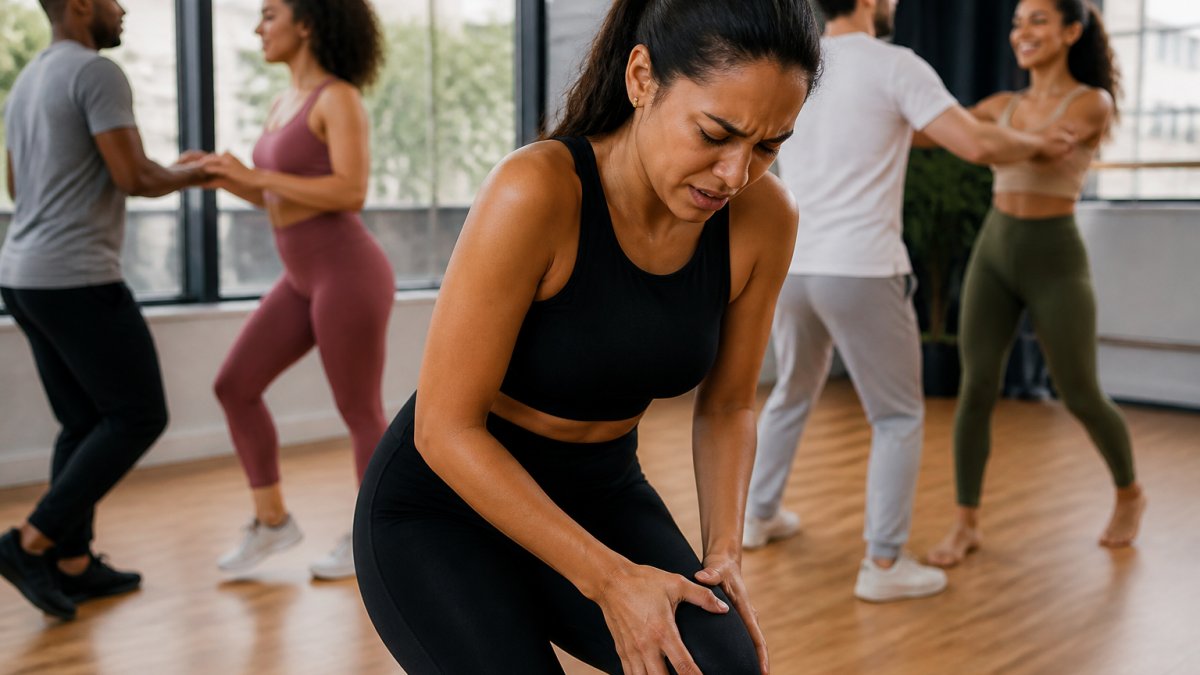
Watch out: if a drill produces pulling, yanking, or a partner wincing, stop and reduce force before continuing. Drills are for calibration, not for muscling through.
Do these for ten minutes before a class. When you feel ready to take it onto the floor, here is how to start bachata social dancing as a beginner.
Troubleshooting Connection Problems by Symptom
Most connection problems have a clear cause and a simple fix. Diagnose by what you feel, then adjust.
Symptom | Likely Cause | Fix |
Jerky weight changes | Locked knees, stiff legs | Soften knees, stay on balls of feet |
Pulling or yanking | Tight grip, leading with arms | Loosen hands, lead from torso |
Follower feels lost | Late or unclear signals | Signal earlier, move center first |
Dance feels flat | Ignoring the music | Match weight changes to the rhythm |
Partner seems tense | Too much force | Reduce pressure, breathe, relax frame |
Watch out: if your partner winces or pulls back, you are using too much force. Ease off and let the signal do the work.
Respect, Boundaries and Adapting to Different Partners
Every partner is different, so connection means reading comfort and adjusting. Respect for personal space and boundaries is not optional. It is the foundation of safe, enjoyable dancing. Noticing and respecting those boundaries lets trust grow on and off the dance floor, where the benefits of social connection can make shared movement feel more welcoming.
Reading Comfort Before and During the Dance
Comfort shows up in the body before it shows up in words. A partner who is comfortable tends to have relaxed shoulders, a steady frame, and weight that moves toward you.
None of these signals is proof on its own. Treat them as prompts to check in, not as conclusions. A common pattern is that a partner who prefers more space will keep their elbow slightly higher and their frame slightly further away, match that distance rather than closing it.
Asking About Comfort Without Making It Awkward
You do not need a formal conversation. A short, low-stakes check works better than a long one. Useful phrasings include:
"Is this hold comfortable for you?"
"Would you like more space, or is this good?"
"Tell me if I'm holding too tight."
Ask once, early, and then trust the answer unless the body says otherwise. If a partner says they are fine but their frame stays stiff, reduce pressure and distance anyway. The body's answer overrides the verbal one when the two disagree.
Adjusting the Hold and Distance
Connection is not a fixed distance. It is a range you negotiate with each partner.
Open hold: keep fingertip contact light and let the partner set the distance. If they step back, do not follow to close the gap.
Closed hold: keep the frame soft and the shared center light. If a partner keeps their hips further away, that is a preference, not a mistake, lead from the upper body and let them choose the lower-body distance.
Sensual movement: prepare before you move. A body wave or hip movement should start from a settled, balanced position, not from a forced range. If a partner's range of motion is smaller than yours, match theirs rather than pushing toward yours.
Watch out: if a partner winces, pulls back, or goes stiff when you increase closeness or movement range, you have crossed a limit. Ease off immediately and do not re-test it in the same dance.
Responding to Nonverbal Feedback in Real Time
Nonverbal feedback is continuous, so your adjustment should be too. Three signals matter most:
Weight: if your partner's weight stops moving toward you, they are either unsure of the signal or uncomfortable with the direction. Slow down and simplify.
Tone: a frame that suddenly tightens is a request for less force, not more. Reduce pressure and breathe.
Distance: if your partner keeps re-establishing space, stop closing it. Dance at the distance they choose.
A professional perspective on partner awareness in sensual bachata notes that good connection includes noticing a partner's physical state, including fatigue and personal movement preferences. Fatigue is part of this: a tired partner signals less clearly, so lead simpler material and give more space.
When Limits Differ From Yours
Limits will differ. A partner may decline close hold, sensual movement, or a particular style of lead. Respect the limit without question and without negotiating mid-dance. If you want to practise a specific style, say so before the dance so the other person can choose. If you are looking for someone to practise with, this guide on how to find a bachata dance partner can help.
Book a Beginner Bachata Class and Feel It for Yourself
Reading about connection only gets you so far. You have to feel it with a real partner, in real time, with music playing.
That is exactly what we do at Latin Soul Dance.
Ready to begin? Explore our beginner bachata classes and how to start, or find beginner-friendly bachata classes in The Hague you can book today.
Frequently Asked Questions
What does connection mean in bachata?
Connection is the physical and attentional link between two dancers. It runs through the hands, arms, frame and shared centre, and it lets a leader suggest a movement and a follower answer it. It is not the same as squeezing tightly or memorising a pattern. Most of it comes from a relaxed posture, a light handhold and clear weight changes, which is why connection quality improves fastest when you work on those basics rather than on more figures.
How do you improve partner connection in bachata?
Practise slowly and in small pieces. Stand in front of a partner with a light handhold and shift your weight from foot to foot without stepping, feeling when the other person shifts too. Then add a simple side-to-side basic and keep the arms relaxed. Bachata connection exercises like these can help build awareness, because you can feel the signal instead of guessing at it.
How should you hold your partner's hands in bachata?
Lightly, with relaxed fingers and no gripping. In an open hold your palms meet at roughly chest height, elbows soft and slightly in front of your body rather than locked straight. In a closed hold the leader's right hand rests on the follower's upper back and the follower's left hand sits on the leader's shoulder or upper arm. The handhold carries signals, so tension in the hands travels straight into the lead and makes the dance feel stiff.
How can beginners practise bachata connection at home?
You do not need a partner for the first steps. Practise your basic step in front of a mirror with slightly bent knees and an upright torso, checking that your weight lands on the balls of your feet. Then work on timing by stepping on the tap and the three counts out loud. When you do dance with someone, start with one slow song and focus only on the handhold and weight transfer, ignoring new moves until the connection feels steady.
Connection is a skill you build, not a talent you are born with. The dancers who feel effortless are the ones who practised posture, relaxed hands and clear signals until they became habit. Get started with Latin Soul Dance and turn those small habits into real confidence on the dance floor.


Comments