
How to Take Private Salsa Lessons as a Beginner
Last Updated: October 30, 2026
Quick Summary
Private salsa lessons for beginners are one-on-one or small-group sessions where an instructor teaches the basics at your own pace. Nobody else sets the speed, and you can ask as many questions as you need.
Private lessons suit people who feel self-conscious in a crowd or have busy schedules.
You do not need a partner; many beginner courses cover solo footwork first.
Wear comfortable clothes and smooth-soled shoes that let you turn without gripping the floor.
Practise the six-count basic step in ten-minute daily bursts, counting aloud at a slow tempo.
A focused block of four to eight private sessions suits a specific event deadline.
Table of Contents
What Private Salsa Lessons Are and Who They Suit
Private salsa lessons for beginners are one-on-one or small-group sessions where an instructor teaches you the basics at your own pace. Nobody else sets the speed, and you can ask as many questions as you need. For many people starting out, that is the whole appeal.
Private lessons suit a few kinds of learners especially well. If you feel self-conscious in a crowd, a private session removes the audience. If you have a busy schedule and miss classes often, you can book around your calendar. And if you have a specific goal, such as preparing for a wedding or a social event, you can focus the lesson on exactly that.
Expats and international residents in The Hague often choose private lessons when they are new to the city and want a way to get comfortable before joining a larger social scene. Seniors who want a low-impact way to move to music also tend to prefer them.
Salsa Lessons Without a Partner: How It Works
You do not need a partner to start learning salsa. This is one of the most common worries for first-timers, and it is usually unfounded. Many beginner courses cover solo footwork and the basic count before partner work begins.
In a typical beginner session, an instructor may walk you through the rhythm, the basic step, and how your weight moves from one foot to the other. Partner work can be introduced later.
If you want to get comfortable with the footwork before your first lesson, practising the basic step at home with music can help. Our beginner walkthrough covers those fundamentals in more detail.
What to Expect in Your First Private Lesson
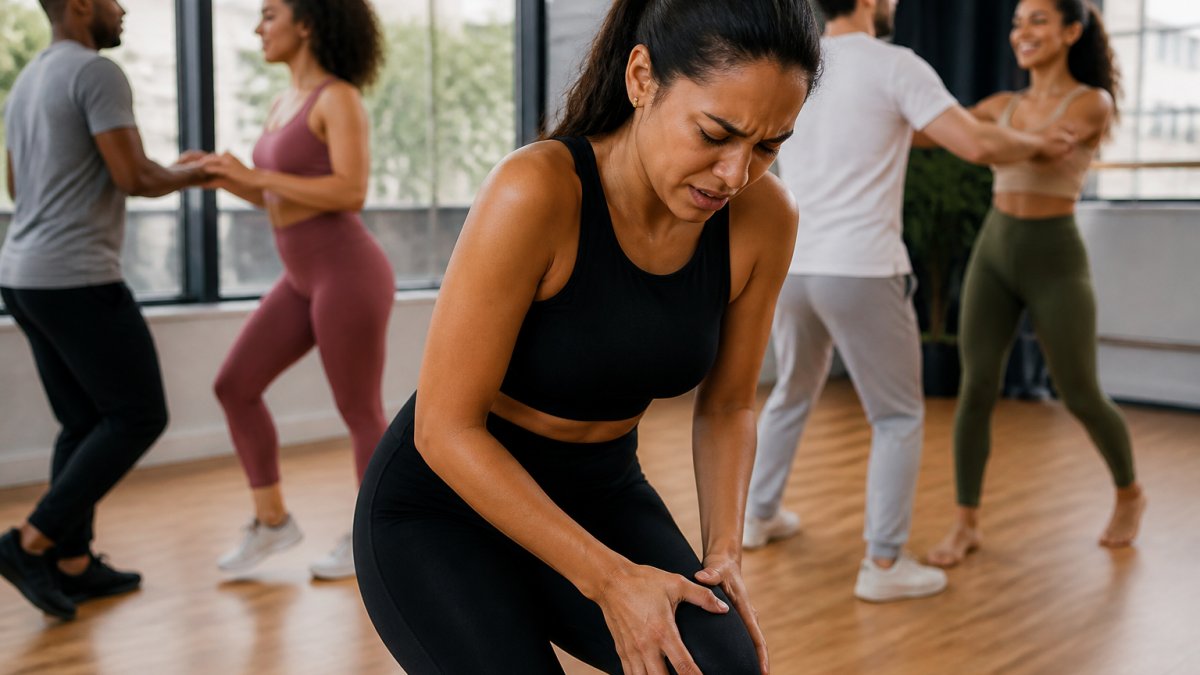
Be honest about your experience, goals, and any physical concerns, such as knee or back issues, so that an instructor can adjust the pace and movements to suit you.

Next comes a warm-up, followed by the basic step and simple counts. Expect to repeat the same movement many times. This feels repetitive, but it builds the muscle memory that makes dancing feel natural later on. You will likely feel a bit awkward at first. Read seven reasons feeling awkward dancing is completely normal if that worries you. That is normal, and most people feel the same way in their opening session.
Wear comfortable clothes you can move in, and bring shoes with smooth soles that let you turn without gripping the floor. Our guide to what to wear to your first salsa class covers the details. Trainers with heavy grip can strain your knees during pivots.
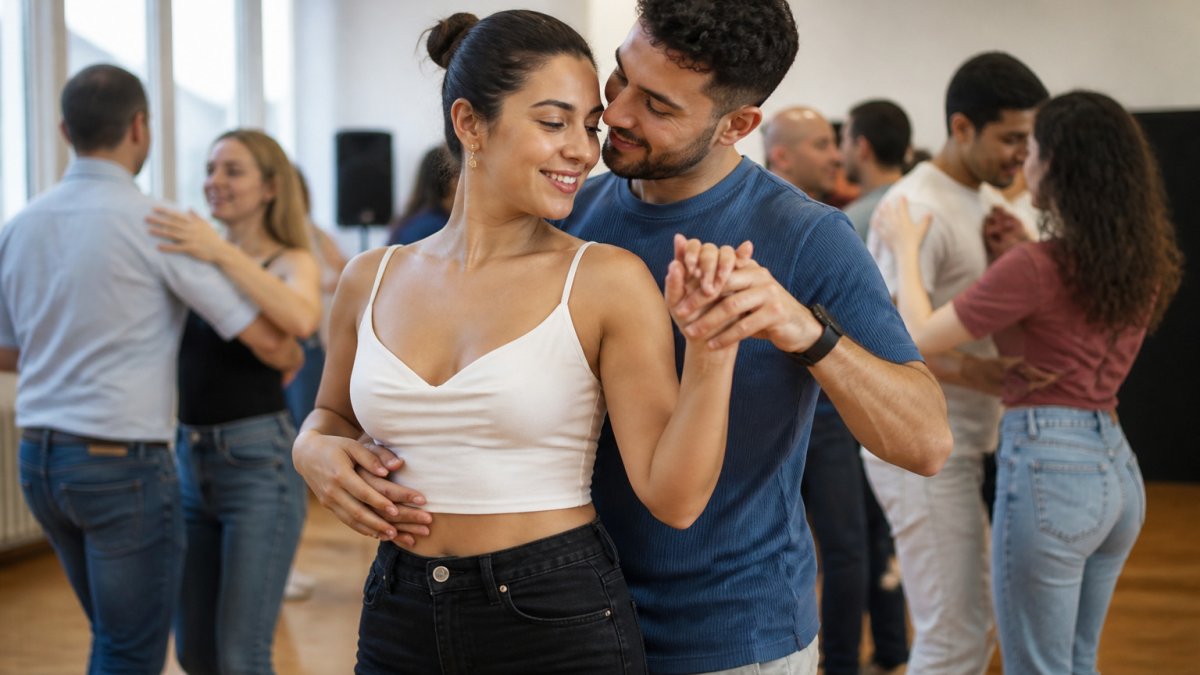
![A friendly instructor and a beginner dancer practising basic salsa footwork together in a bright, mirrored studio with wooden floors | section:What to Expect in Your First Private Lesson]
Basic Salsa Steps for Beginners to Practise First
Many beginner courses teach a six-count basic step danced in an eight-beat musical phrase. For a full walkthrough, see how to learn salsa as a complete beginner. Understanding that structure before a lesson can make practice more productive.
The count and the pause
Salsa music is counted in phrases of eight beats. The basic step uses six of them, with a pause on counts 4 and 8. Say it out loud as you practise: "one, two, three … five, six, seven …" and let the silent beats pass. The pause is not dead time, it is where your weight settles and where the next phrase begins. Dancing through the pause is the single most common beginner error, and it makes everything that follows feel rushed.
The forward-and-back basic (the one most beginners learn first)
Stand with feet hip-width apart, weight centred.
Count 1: step forward with your left foot, transferring your weight onto it.
Count 2: step in place with your right foot, weight now on the right.
Count 3: step back with your left foot to where it started, weight on the left.
Count 4: pause, weight settled.
Count 5: step back with your right foot, weight onto the right.
Count 6: step in place with your left foot.
Count 7: step forward with your right foot, returning to the start.
Count 8: pause.
You are always stepping onto a bent knee, never a locked one, and your hips follow the weight transfer rather than being forced. If you are following rather than leading, the same pattern is mirrored: you step back on count 1 as your partner steps forward.
The side-to-side basic
Many Cuban-style and casino-influenced classes start with a lateral basic instead. The rhythm is identical, but the steps travel sideways: left foot to the side on count 1, right foot closes on count 2, left foot taps or steps in place on count 3, pause on 4, then mirror to the right for counts 5-7. Learning both early means you can slot into whichever style your instructor teaches.
Practising on your own before the lesson
Pick a slow track. Tempo matters more than genre at this stage. A metronome app set to roughly 80-90 beats per minute, or a slow salsa playlist, keeps the count honest.
Practise in short bursts. Ten focused minutes daily beats an hour once a week, because the pattern is stored through repetition, not duration.
Film yourself once a week. Most phones are enough. Watching back reveals whether you are stepping through the pause or collapsing your posture, things that are hard to feel but easy to see.
Count aloud, then count silently. Once the spoken count is steady, switch to counting in your head so you start listening to the music rather than to your own voice.
Common beginner mistakes to watch for
Bouncing instead of stepping. The knees bend to absorb weight; the whole body should not bob up and down on every beat.
Looking at your feet. It feels safer, but it locks your posture and makes leading or following harder later. Use a mirror instead.
Gripping the floor. Smooth-soled shoes let the ball of your foot pivot; heavy trainers fight the turn and load the knee.
Rushing the pause. If you find yourself counting "one, two, three, four, five" evenly, slow the track down until the gap on 4 and 8 feels natural.
You do not need to master the basic step before booking a private lesson. Arriving able to count to eight and step on the spot is enough, the instructor's job is to fix the details, and a good one will rebuild your basic from the ground up in the first session anyway.
Once the forward-and-back and side-to-side basics feel steady at a slow tempo, you are ready to add the simple right-turn and cross-body lead that most beginner courses introduce in weeks two to four.
Private Lessons Versus Group Classes
Beginners can use private sessions and group classes for different purposes. Here is how to decide where your money and hours go.
What each format actually gives you
| Private lessons | Group classes |
Attention per hour | Undivided; the instructor watches your posture, frame, and footwork continuously | Shared across the room; corrections are general unless the class is small |
Pace | Set entirely by you, slow down, repeat, or skip ahead | Fixed by the group and the course syllabus |
Cost per hour | Higher, because you are paying for one-to-one time | Lower, because the cost is spread across the class |
Social practice | Limited unless you book a small-group session | Built in, you rotate partners and meet other beginners |
Scheduling | Flexible; you book around your calendar | Fixed weekly slot for the length of the course |
Best for | Fixing a specific block, pre-event preparation, rebuilding confidence after a bad start | Regular weekly rhythm, meeting people, practising with different partners |
How many private sessions does a beginner actually need?
Some beginners take a short block of private sessions at the start, then move into a group course. The private block does three jobs: it builds a correct basic step before bad habits set in, it teaches you how to practise alone, and it gives you enough confidence to walk into a group class without feeling lost. After that, group classes provide the repetition and partner variety that private lessons cannot.
If your goal is a specific event, a wedding, a work party, a first social, a focused block of four to eight sessions timed to finish a week or two before the date works well. It leaves a buffer to practise what you have learned in a real social setting.
The hybrid model that works best
Weeks 1-4: one private session per week, plus ten minutes of solo practice on most days. Focus entirely on the basic step, the count, and posture.
Weeks 5-12: join a weekly beginner group course. Keep a private session every two to four weeks as a check-in, or book one whenever a specific step stops working.
Ongoing: group classes and socials for volume; occasional private sessions before a event or when you want to move up a level.
When private lessons are clearly the better buy
You have a fixed deadline and cannot wait for a course to reach the relevant material.
You have a physical limitation, knee, back, or shoulder issues, that needs movements adapted rather than a standard syllabus.
You have tried group classes and found the pace or the crowd overwhelming.
You learn better with direct, immediate correction than with general instruction.
When group classes are clearly the better buy
You want a predictable weekly routine and a social circle more than rapid technical progress.
Your budget is tight and you would rather dance three times a week than once.
You already have a solid basic step and mainly need partner variety and floor time.
Whichever route you take, ask the studio before booking about its class formats and whether private sessions can be shared.
How Long It Takes to Learn Salsa
Learning times vary, and many beginners need several weeks of regular practice before feeling comfortable with the basic step. If you are just getting going, begin your salsa dancing journey with confidence walks you through the first steps.
Consistency matters more than intensity. Two shorter sessions a week beat one long session, because your body needs time to absorb each movement.
Be patient with yourself. Everyone progresses at a different pace, and a few awkward weeks are part of the process.
Booking Your First Private Lesson at Latin Soul Dance
Ready to start? Contact Latin Soul Dance through the website to ask about availability and current pricing.
At Latin Soul Dance, we believe every beginner deserves a welcoming first step. Get started with a private session and find out how much rhythm you already have.
Frequently Asked Questions
Are private salsa lessons good for beginners?
Yes, for most absolute beginners private lessons are a good starting point. You also move at your own pace, so you can repeat a basic step as often as needed without holding up a class. Many people then join group classes once the basic step feels comfortable.
Can I take private salsa lessons without a partner?
Yes. Private lessons are designed for individuals, so you do not need to bring a partner. Partner work can be added later once you feel confident enough to dance with others.
How long does it take to learn basic salsa steps?
Most beginners can learn the basic step within a few lessons, but feeling comfortable with it on the dance floor usually takes several weeks of regular practice. Progress depends on how often you dance and practise between lessons.
What should I wear to a beginner salsa lesson?
Wear comfortable clothing that lets you move freely, and shoes with a smooth sole that allows you to turn and slide without gripping the floor. Avoid rubber soles that stick. Many dancers choose dance shoes once they are committed, but any flat, smooth-soled shoe works for a first lesson. Bring water and layers, since salsa can be physically active.
Let's Dance. Book your first lesson with Latin Soul Dance today.



Comments