
How to Learn Reggaeton Dance at Home: A Beginner's Plan
Last Updated: October 28, 2026
Quick Summary
You can learn reggaeton dance at home with a small clear floor space, a speaker, and short daily practice. Start with a steady pulse, basic weight shifts on the count, then add small knee bends and hip movement. Build skill one phrase at a time, using slow tempos before speeding up.
Reggaeton is built on a steady dembow beat, which keeps home practice predictable.
You only need a small, clear floor area and something to play music from.
Practise short sessions of 15 to 25 minutes, three to four times a week.
Count eight-count phrases out loud at slow tempos before adding hip movement.
Record one phrase weekly and check whether your steps land on the count.
Table of Contents
What Reggaeton Dance Involves and Why Beginners Can Start at Home
Reggaeton dance is built on a simple, repeating rhythm, and that makes it one of the easier styles to learn on your own, so you can learn reggaeton dance at your own pace.
The moves are grounded, the rhythm is steady, and the body isolations are easy to practise in front of a mirror or a phone camera. A common mistake is assuming you must be "good at dancing" first. You do not.
Reggaeton rests on a steady dembow beat, which keeps your practice predictable.
Most basic moves use hips, knees, and weight shifts, not complicated spins.
Short, daily sessions build more skill than one long session each week.
Setting Up Your Space and Gear for Home Practice
You only need a small, clear floor area and something to play music from. A living room or bedroom works well. Move furniture away from your path, and leave enough room to step side to side with your arms out.

Wear clothes that let you move freely, and shoes with a little grip or go barefoot on a non-slip surface. Prop your phone on a shelf at chest height so you can watch yourself or follow a video.
Reggaeton Dance Moves for Beginners: The Foundational Steps
Start with a few core moves and practise them until they feel easy. Build from there. Trying to learn a full routine on day one usually leads to frustration.
Basic Footwork and Weight Shifts
Footwork anchors everything else. Begin with a basic step: put your weight on one foot, then shift it to the other on the beat. Keep your knees soft and your feet about hip-width apart. Once that feels steady, add small bounces, staying light on your toes.
Hip and Body Movement
The signature sway comes from the hips, but it starts with the knees. Bend slightly, then let your hips move side to side in time with the beat. Keep your upper body relaxed. Forcing big hip movements too soon can strain your lower back, so go slowly and let the motion grow.
Reggaeton Rhythm and Body Movement: Hearing the Beat and Counting
Most beginner tutorials show the move but skip the skill that makes the move land: hearing where the beat actually is. Reggaeton is built on the dembow, a repeating three-hit percussion pattern that gives the style its signature bounce. You do not need to name every drum to use it. You need to find the pulse, feel the phrase, and match your weight shifts to it.
Find the pulse before you find the steps
Put on a slow reggaeton track and do nothing but listen for 30 seconds. Tap your index finger on your thigh each time you feel the strongest, most regular hit. That is the pulse. Most reggaeton sits in a 4/4 feel, so you will count four beats per bar and usually eight counts per phrase.
A useful test: clap on counts 1 and 3 only. If your clap drifts, stop, rewind, and start again. Accuracy matters more than speed at this stage.
Locate the dembow pattern
The dembow is often described as a "boom-ch-boom-chick" feel. Listen for the low drum hit and the lighter hits that follow it. Try this sequence with a slow track:
Count 1-2-3-4 out loud.
Nod your head on every count.
Add a small knee bend on counts 2 and 4.
Once that feels steady, let your hip drop slightly on the same counts.
This is not the full move yet. It is rhythm training: teaching your body to respond to the pattern instead of guessing.
Count in phrases, not single beats
Reggaeton choreography usually repeats in eight-count phrases. Counting to eight keeps you oriented when a move changes. Practise like this:
Play a slow track and count one full eight-count out loud.
Do the basic weight shift for that phrase only.
Pause, reset, and repeat the same phrase three times.
Then let the track run and count the next phrase silently.
If you lose the count, do not restart the song. Find the next "1" and rejoin. Rejoining mid-phrase is a real dance skill and worth practising.
Match steps to tempo without rushing
Speed is the most common reason beginners look stiff. Use tempo as a dial:
Slow tempo (roughly 70-85 BPM): learn footwork and count out loud.
Medium tempo (roughly 85-100 BPM): add hip movement and keep the count silent.
Faster tempo (roughly 100 BPM and up): reduce the size of your movements and let the bounce carry the rhythm.
Many streaming platforms and video players let you slow playback to 0.75x or 0.5x. Use that instead of forcing your body to keep up. A clean slow repetition teaches more than a rushed fast one.
Pro Tip Record 30 seconds of yourself counting out loud while you dance. Play it back and check whether your steps land on the counts you are saying. This is the fastest self-check for rhythm drift.
Once you can count a phrase without thinking, your body starts predicting the beat instead of reacting to it. That is when reggaeton begins to feel natural rather than mechanical.
Following a Reggaeton Dance Tutorial for Beginners Step by Step
Video tutorials are one of the best ways to learn reggaeton dance at home. Pick a beginner tutorial that breaks moves into small parts, then follow along in this order: watch the full move once, practise it slowly with the video, and then match the tempo. Pause and rewind whenever you need to.
Most beginners learn fastest when they focus on one new move per session. Repeat it for a few minutes, then review the moves from earlier sessions. This keeps your practice short and your progress steady.
Building a Reggaeton Dance Practice Routine You Can Keep
Most at-home learners quit not because the moves are too hard but because they have no plan. A progressive four-week structure gives you something to follow, a way to measure progress, and a reason to practise on days when motivation is low. Treat this as a template, not a rigid schedule.
The weekly frame
Aim for three to four sessions of 15-25 minutes. Short and frequent beats long and occasional. Each session follows the same shape so you do not have to decide what to do when you press play:
Warm-up (3-5 minutes): marching in place, arm circles, hip rolls, gentle knee bends.
Rhythm drill (3-5 minutes): count an eight-count phrase out loud to a slow track.
Skill focus (8-12 minutes): one new move or one weak point from last session.
Review (3-5 minutes): run the moves you already know in sequence.
Cool-down (2-3 minutes): slow stretches for hips, calves, and lower back.
Four-week progression
Week 1, Pulse and weight shift. Learn to find the beat and shift weight side to side on the count. No hip styling yet.
Week 2, Basic step and bounce. Add small knee bends and a light bounce on counts 2 and 4. Goal: keep the bounce steady for two full phrases.
Week 3, Hip movement. Let the hips follow the knee bends. Keep the movement small. Goal: combine footwork and hip movement for one phrase at a slow tempo.
Week 4, Combination and style. Link two moves you know into a short sequence. Add one personal detail, such as a shoulder accent or a head nod. Goal: perform the sequence three times in a row without stopping.
Track progress with simple markers
You do not need a complicated journal. Note three things after each session:
Which move you practised.
The tempo you used (slow, medium, or full speed).
One thing that felt better than last time.
A phone note is enough. Reviewing it weekly shows progress that is easy to miss day to day.
Use recording as feedback
Prop your phone at chest height and record one phrase at the end of each week. Watch it back with the sound on. Check three things: whether your steps land on the count, whether your knees stay soft, and whether your upper body looks relaxed. Delete the clips if you like, the value is in the review, not the archive.
Key Takeaway A four-week plan with short, structured sessions and weekly recordings turns vague practice into visible progress. If you miss a day, continue where you left off rather than restarting the plan.
When the four weeks are done, repeat the cycle with faster tempos or new moves. The structure stays the same; only the difficulty changes.
The four-week plan below sets out what each week focuses on, so you can track progress from one stage to the next.
Week | Focus | Goal |
1 | Pulse and weight shift | Complete one eight-count phrase without losing the count |
2 | Basic step and bounce | Keep the bounce steady for two full phrases |
3 | Hip movement | Combine footwork and hip movement for one phrase at slow tempo |
4 | Combination and style | Perform the sequence three times in a row without stopping |
Troubleshooting Common Beginner Mistakes and Staying Safe
Most beginner problems are easy to fix. Watch for these common issues:
Stiff knees: Keep them soft so your hips can move freely.
Moving too fast: Slow the track down or practise at half speed.
Hips leading everything: Let your feet and knees set the rhythm first.
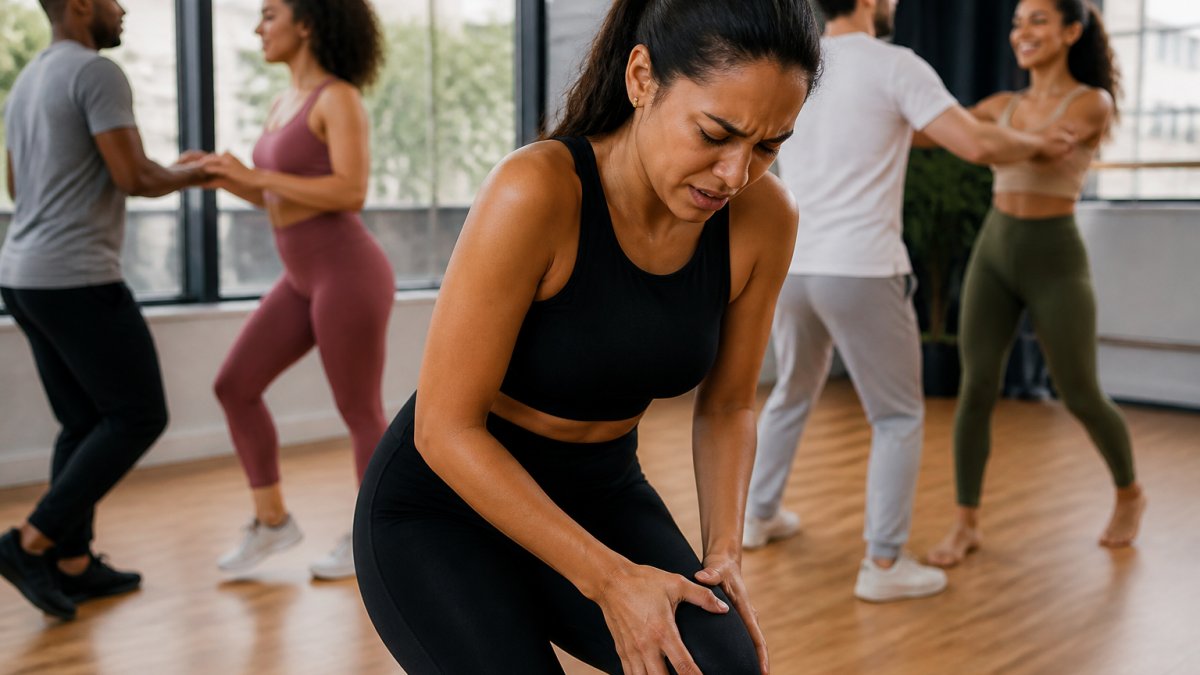
Ignoring pain: Stop if you feel sharp pain in your knees, hips, or lower back.
Warm up with gentle marching, arm circles, and hip rolls before each session. Stretch afterwards. Give yourself rest days so your body can recover.
Taking Your Next Step: Joining a Live Class at Latin Soul Dance
At Latin Soul Dance, our supportive instructors give step-by-step guidance. You will also find a friendly, international environment.
If you are ready to move from your living room to the studio floor, explore our fitness class options.
Let's Dance - Book Now.
Frequently Asked Questions
Can you learn reggaeton dance at home?
Yes. Most of the core skills in reggaeton, including basic footwork, hip movement, weight shifts and the feel of the beat, can be learned at home with a clear space, a reliable source of music and a structured routine. Short daily sessions of 15 to 20 minutes work well for beginners. Video tutorials that show steps slowly and from several angles help you copy the movements accurately. Live feedback from an instructor is not required to start.
How do beginners start learning reggaeton dance?
Start with rhythm before moves. Listen to a few reggaeton tracks and clap or tap on the main beat until you can keep it steady. Then learn one basic footwork pattern and one hip movement, practising each slowly in front of a mirror. Add the steps together only when both feel comfortable. Keep sessions short, repeat the same pattern for several days, and avoid trying to learn complicated choreography in your first week.
How often should I practise reggaeton dance as a beginner?
Three to four sessions of 20 to 30 minutes per week is a realistic starting point, with a short warm-up each time. Consistency matters more than length. Practising a little every other day helps the movements settle into your body. If you have a demanding schedule, even ten minutes of focused practice on the beat and one basic step can keep your progress moving. Rest days help prevent soreness in the hips, knees and lower back.
What should I wear to practise reggaeton at home?
Wear fitted or loose clothing that lets you move freely at the hips and knees, such as leggings or athletic trousers and a breathable top. Choose shoes with a thin, flexible sole or practise in socks on a smooth floor. Avoid thick-soled trainers if they make you feel unstable during pivots and weight shifts. Make sure the floor is clear of rugs or objects that could cause you to slip or trip while moving.


Comments