
Beginner Bachata Classes: Your First Steps to Dancing
Last Updated: October 23, 2026
Quick Summary
Beginner bachata classes teach the basic side-together-side step with hip movement in your first session, and you'll feel comfortable with it after three to four classes. Most beginner classes rotate partners, so you don't need to bring one, and instructors welcome people with zero dance experience.
A typical 60-minute beginner class includes 10 minutes of warm-up, 15 minutes learning the basic step solo, 20 minutes of partner practice, and 10 minutes of simple combinations.
Wear leggings or dance pants with a fitted top and smooth-soled shoes like clean sneakers; avoid jeans, rubber-soled gym shoes, and heels.
Most beginner bachata classes run in early evening around 18:00-20:00 on weekdays, with some weekend morning slots available.
Beginner blocks typically run 6-10 weeks, and pricing includes drop-in rates, course packages of 4-10 classes, or monthly memberships.
Table of Contents
Why Beginner Bachata Classes Are Perfect for Starting Out
What to Expect at Your First Bachata Class
A typical 60-minute beginner class, minute by minute
What to bring and what to wear
Questions to ask before your first class
What you will likely feel afterwards
What to Wear to a Bachata Class
How Long Does It Take to Learn Bachata
Bachata Classes Without a Partner: You Don't Need One
Class Schedules, Pricing, and Getting Started
What to compare, side by side
Pricing: what the numbers usually look like
Schedules: when beginner classes usually run
Getting started: a practical first-week plan
A note on total cost and cancellation terms
Common Beginner Concerns, Answered
Your First Week: What Happens Next
Frequently Asked Questions
Why Beginner Bachata Classes Are Perfect for Starting Out
Bachata is one of the most accessible Latin dances to learn. Unlike styles that demand years of training, beginner bachata classes welcome people with zero experience and teach the fundamentals in weeks, not months. The basic step is simple: side-together-side with a gentle hip movement. Everything else builds from there.
Bachata is forgiving: the rhythm is slower than salsa, the footwork is straightforward, and the partnering is intimate without being intimidating. You're not spinning fast or executing complex sequences, just learning to move with intention.
At Latin Soul Dance, we believe bachata isn't about natural talent, it's about showing up and following along.
What to Expect at Your First Bachata Class
Most beginner bachata classes follow a similar structure.

A typical 60-minute beginner class, minute by minute
Minutes 0-10: arrival and warm-up. You sign in, meet the instructor, and do light stretching and simple weight shifts. Tell the instructor you're brand new and mention any injuries.
Minutes 10-25: the basic step, solo. The instructor breaks down the side-together-side step and hip movement, and you practise without a partner. You'll repeat this more than you expect, and that repetition is the point.
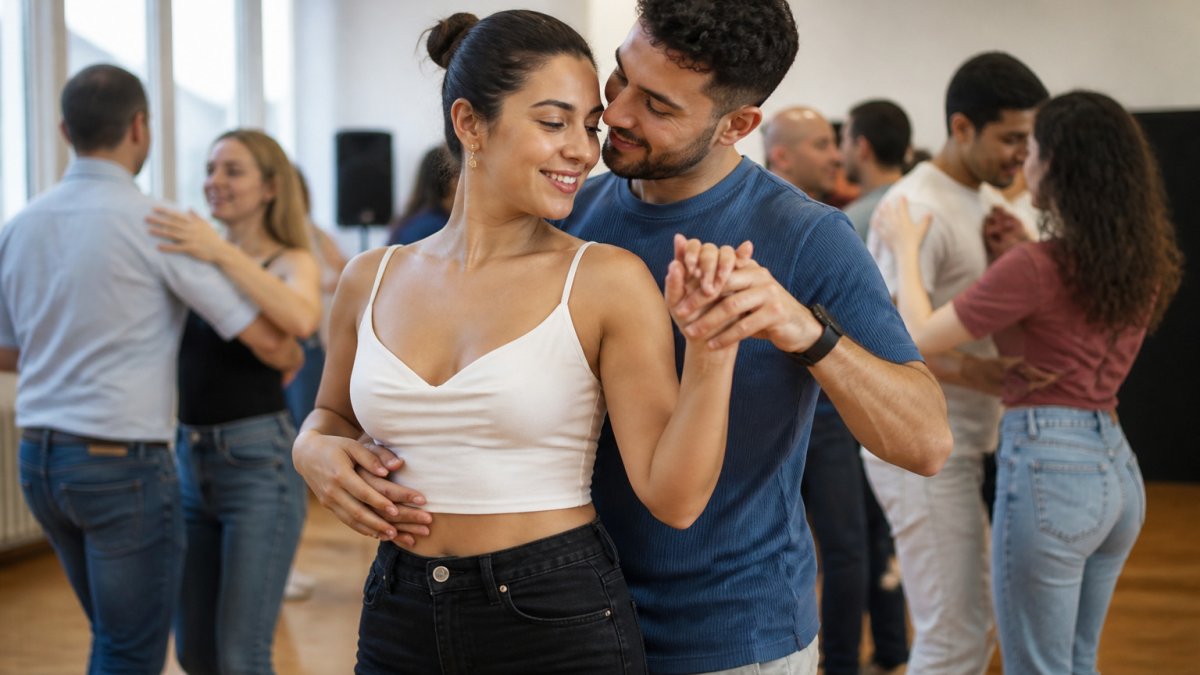
Minutes 25-45: partner practice. You rotate partners and practise the basic step with gentle connection while the instructor corrects common mistakes in real time.
Minutes 45-55: simple combination. You add one or two basic variations, usually a turn or change of direction, at beginner pace.
Minutes 55-60: cool-down and questions. You stretch, and the instructor explains what the next class covers.
Class sizes vary widely.
What to bring and what to wear
Clothes: leggings, joggers, or dance trousers and a fitted top. Avoid jeans, restrictive fabrics, and zippers, buttons, or hardware that could catch on a partner's clothing.
Shoes: smooth-soled shoes that let your feet pivot without sticking. Clean sneakers work for a first class; avoid rubber-soled gym shoes that grip too much and heels that throw off your balance. Proper dance shoes are optional at beginner level.
Water and a small towel: bring your own bottle; most studios have a water station, but your own is simpler.
No partner required: most beginner classes rotate partners, so you can attend alone.
Questions to ask before your first class
Ask directly:
What is the average class size, and how many instructors are present?
What language is the class taught in? Many studios teach in Dutch, some in English, and some mix.
What is the age range in beginner classes?
Is the studio accessible? Ask about step-free access, lifts, and accessible toilets if you need them.
What is the partner rotation policy? Confirm you won't be left without a partner if you attend alone.
What happens if I miss a class? Ask about credits or make-up classes.
What you will likely feel afterwards
You'll probably feel a little clumsy, and that's normal. Most beginners leave their first session having practised the basic step with several partners and learned one simple variation. Mild calf and foot soreness is common the first week. The second class feels noticeably less foreign because your body remembers the step.
What to Wear to a Bachata Class
Wear clothes that let you move freely: leggings, joggers, or dance pants and a t-shirt or fitted top. Avoid jeans, restrictive fabrics, anything so loose you can't see your body position, and zippers, buttons, or hardware that might catch on a partner's clothing.
Shoes matter more than most beginners realize. Bachata's gliding movements need shoes that let your feet slide without sticking: soft-soled dance shoes, smooth leather-soled shoes, or clean sneakers. Avoid rubber-soled gym shoes that grip too much and heels that throw off your balance. Proper dance shoes are optional for your first few classes.
Bring water. Bachata isn't as intense as some dance styles, but you'll be moving continuously. Most studios have water stations, but your own bottle is convenient.
How Long Does It Take to Learn Bachata
You can learn the basic step in one class. After three to four classes, you'll move it with reasonable comfort. After eight to ten classes, the step becomes automatic, and you can focus on partnering, musicality, and styling.
"Learning bachata" means different things. The fundamentals take weeks;
The timeline depends on how often you practice.
Bachata Classes Without a Partner: You Don't Need One
This question stops many people from signing up: "Do I need to bring a partner?" No.
Dancing with different partners can help you develop adaptability to different heights, lead styles, and energy levels, a skill you'll need for social dancing.
Many people come alone, whether from nerves or because friends aren't interested. That's the norm, not the exception. You'll be in a room full of solo dancers in exactly your position, and nobody feels awkward about rotating partners.
If you're worried about partnering, mention it to your instructor before class. Good instructors build confidence gradually and pair newer dancers thoughtfully.
Class Schedules, Pricing, and Getting Started
Beginner bachata classes usually run on fixed weekly schedules, and the practical details vary. Use the checklist below to compare options, and confirm every figure directly with the studio, because prices and start dates change each season.
What to compare, side by side
What to check | Why it matters | Typical range to expect |
Location and transit access | The query is proximity-driven; a 20-minute difference each way affects whether you actually keep attending | Confirm nearest tram, metro, or bus stop and whether bike parking is available |
Beginner start dates | Some studios run rolling enrolment; others start a new beginner block every 6-10 weeks | Ask for the next two start dates |
Class frequency | Once a week is common; twice a week accelerates progress noticeably | 1-3 sessions per week |
Drop-in vs course | Drop-in lets you test the room; courses are cheaper per class but require commitment | Drop-in usually costs more per session than a course package |
Trial options | A trial class or introductory week removes the risk of a wrong fit | Free trial, paid trial, or discounted intro week |
Partner requirement | Most beginner classes rotate partners and do not require you to bring one | Confirm rotation policy in writing |
Cancellation and missed-class policy | This is where beginners lose money; policies differ sharply | Ask about refunds, credits, and make-up classes |
Class size and language | Smaller groups mean more correction; language of instruction matters if English is not your first language | Ask for average class size and teaching language |
Pricing: what the numbers usually look like
Pricing in the Netherlands typically falls into three structures. Ask for the total cost, not the headline rate:
Drop-in rate. A single beginner class is the most flexible option but the most expensive per class.
Course package. A block of 4-10 classes is usually priced lower per class than drop-in. Ask whether the package is transferable if you miss a week.
Monthly membership. Some studios offer unlimited or multi-class monthly memberships. Check for a registration fee and notice period for cancelling.
Always ask for the total cost of your first month, including any registration fee, and ask in writing what happens if you miss a class or need to cancel.
Schedules: when beginner classes usually run
Most beginner bachata classes run in the early evening, roughly 18:00-20:00 on weekdays, with some studios adding weekend morning slots. Daytime classes exist but are less common. When you call or email, ask three specific questions:
Which of your weekly slots are specifically for absolute beginners, not mixed level?
How many consecutive weeks does the beginner block run, and what happens after it ends?
Is there a waitlist, and how often do beginner slots open up?
Getting started: a practical first-week plan
Check the schedule against your actual routine. Pick two slots you can realistically attend for six weeks, not one optimistic slot.
Book a trial or drop-in first. Use it to judge the instructor's pacing, the room, and the group.
Arrive 10-15 minutes early. Introduce yourself as brand new so the instructor can pair you thoughtfully.
Ask about the next beginner block before you leave. Beginner blocks fill.
Confirm the cancellation terms in writing.
Independent verification matters: schedules and prices change each season. Note the date you checked each studio's details and treat any figure here as a starting point to confirm directly, rather than a guaranteed current price.
A note on total cost and cancellation terms
Add up the registration fee (if any), the course or membership fee, and the cost of classes you're likely to miss. Then ask about the refund and credit policy for missed classes, illness, and cancellation. A studio that offers credits for missed beginner classes can be a good first commitment.
Common Beginner Concerns, Answered
"I've never danced before. Won't I look ridiculous?" Everyone in a beginner class is learning the same step, and the instructor corrects common mistakes in real time.
"What if I can't follow or lead properly?" Leading and following are skills you develop, not talents you're born with.
"Is this a workout, or is it just dancing?" Both.
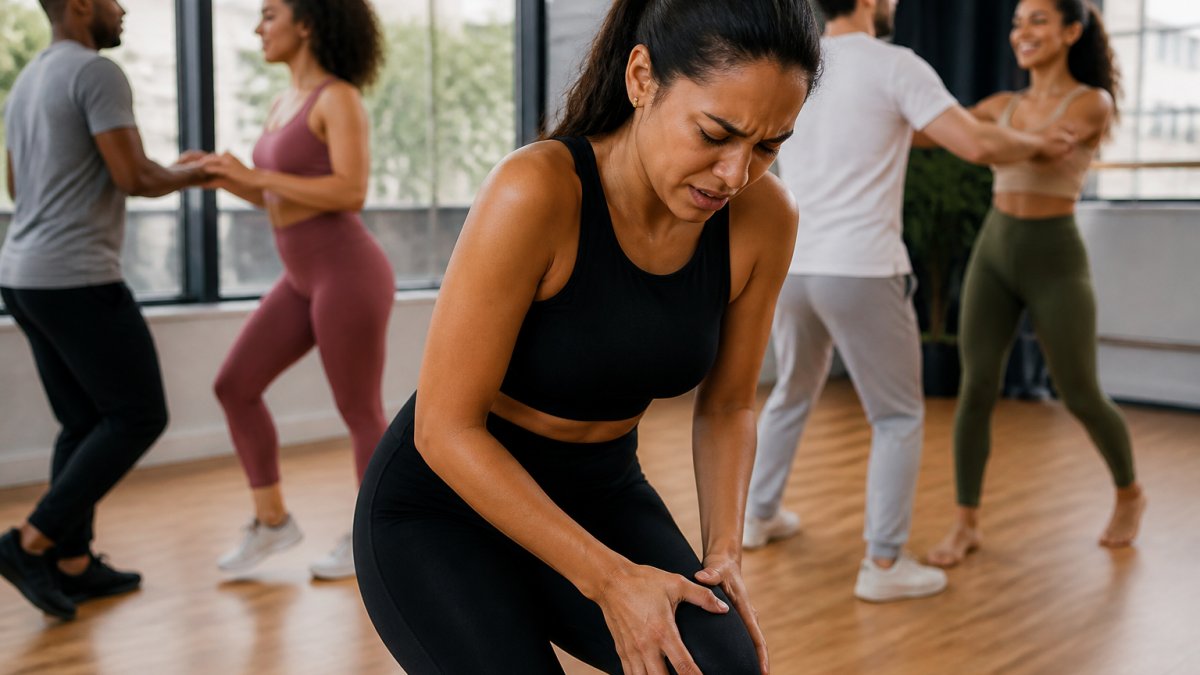
"What if my knees or back are sensitive?" Tell your instructor before class. Bachata is low-impact compared to many dance styles, with no jumping or pounding, and modifications exist for almost every move.
"I'm worried I'll feel awkward dancing with a stranger." That's a common concern.
Your First Week: What Happens Next
After your first class, you'll probably feel a little tired, slightly sore in unexpected places, and genuinely surprised that you learned an actual dance step. The soreness goes away; the confidence stays.
Come back to your second class. The step won't feel as foreign because your body remembers it, and you'll move a little more smoothly.
This is where most people decide whether to keep going.
Talk to your instructor about what you want from classes. Learning for fun and fitness? Want to eventually dance socially? Interested in other Latin styles like salsa? Your goals will shape which classes you take next.
Latin Soul Dance welcomes beginners with zero experience. Our instructors understand that every dancer started exactly where you are now.
Starting beginner bachata classes is one of the best decisions you can make for your fitness, confidence, and social life. According to research on dance and mental health from the American Psychological Association, regular dance participation improves mood, reduces stress, and builds social connection.
Frequently Asked Questions
Do I need a partner to join beginner bachata classes?
No. Beginner bachata classes teach you the fundamentals without requiring a fixed partner. Instructors rotate partners during class or teach solo technique so you build confidence independently. Many beginners start solo and find partners later as they progress. This approach removes a major barrier for people hesitant to start dancing.
What should I wear to my first bachata class?
Wear comfortable, breathable clothing that lets you move freely, fitted trousers or leggings work well. Avoid loose, baggy fabric that gets in the way. Footwear matters: smooth-soled shoes or dance shoes let you pivot and turn without friction. Regular trainers grip the floor too much. Bring water and dress in layers so you can cool down after the workout.
How long does it take to learn bachata basics?
The timeline depends on how often you attend and how much you practice outside class.
Is bachata really low-impact enough for older adults?
Yes. Bachata is gentler than high-intensity cardio because you move at a controlled pace and stay grounded. There's no jumping or running. You control your intensity, step smaller, move slower, or take breaks as needed. Always tell your instructor about any physical concerns so they can suggest modifications.
Let’s Dance – Book Now
Add latinsouldance.com as a preferred source on Google →



Comments